Summer Shorts in Owensboro
Owensboro, Kentucky is known for a number of things: the hometown of Johnny Depp, the birthplace of bluegrass music, and according to Food and Wine magazine, the best BBQ in Kentucky. While I was happy to partake in two of those distinctions (I’m afraid I did not cross paths with the estimable Mr. Depp), that was not the reason I spent a long July weekend in Owensboro.

I was here because I had submitted my ten minute play “All Sales Final” to the Theatre Workshop of Owensboro’s Summer Shorts Festival. There were 105 plays submitted, and mine was one of six accepted for the festival. I was excited that my play was being produced, but I wasn’t sure what to expect upon my arrival. What I ended up with was one of the best theatre experiences I ever had.

I was met at the Evansville, IN airport by Lisa Mingus-Tullis, the Theatre Workshop Board President. Lisa was helpful in introducing me to the theatre (about to begin its 62nd season), the town of Owensboro, and the history of both. She was also kind, excellent company, and enthusiast of both tea and eighties heavy metal.
I had arrived on Thursday, before the three weekend performances, but Lisa invited me to see the rehearsal on Thursday night. I met more members of the staff of the Theatre Workshop, all of whom were very kind and welcoming. I took my seat, and watched the performance of all of the plays. All six were good–it was an excellent show, and the director and cast did a splendid jon with my play. I would go on to watch every performance over the weekend, and the cast would nail it every single time. I felt honored to have such a dedicated and talented cast and director bring my work to life.

I was treated like an honored guest. I was chauffeured about by Lisa, John,and Spencer. John and his lovely wife Kathy invited me to lunch on Saturday, after which John and I braved a thunderstorm to visit the Bluegrass Hall of Fame and Museum. I knew very little about bluegrass music, but learned some surprising things: it is a relatively new genre, its origins tracing back to 1945. I was also pleasantly surprised to learn bluegrass was influenced by 1970s progressive rock. There was an extensive exhibit dedicated to Jerry Garcia, who began his musical career playing bluegrass. At the Saturday show, Courtney presented myself and Spencer with her beautiful painting of hydrangeas, which are featured in the play. The paintings were created to thank me for writing the play. I didn’t know what to say.

After the final show on Sunday, I was introduced to Owensboro’s other claim to fame: BBQ. The entire cast, plus director Spencer, producer Leslie Morgan (also cast member Hayden’s mother) and actor Erin Grant (who appeared in “Going Up,” an excellent play) brought me to the Old Hickory, the place where everyone seemed to agree was the best BBQ. I had a lovely meal with these kind and wonderful people, and was often the case during my time in Owensboro, my money was no good.

On Monday, Lisa arrived to pick me up and return me to the airport in Indiana, I was rather sad to leave. True, I didn’t win either of the prizes (both went to a terrific play named “Thank Thee, Ten” which certainly deserved the award). And after Lisa dropped me off, I didn’t exactly have any easy trip home–my flight was delayed for an hour, upon returning to my vehicle near the airport, I discovered I had a flat tire, and by the time AAA arrived to help and dispatch me, I didn’t make it home until 430 the next morning–I wouldn’t have traded the experience for anything. The theatre community of Owensboro is filled with talented, dedicated, passionate and very kind individuals. There is nothing more you could ask.
And I hope I get to return. Very soon.
“Invincible Summer” On Stage
First of all…the blog is back! I hadn’t posted anything since August, and its hard to keep up during the school year. But things really got away from me this year!
Thus, I have some catching up to do. I never wrote about the production of my play “Invincible Summer” last May at the Hole in the Wall theatre in New Britain, CT. I also completed an entertaining and successful film festival “tour” in the fall (that brought me from Mystic, CT, to Philadelphia, Hamilton, Ontario and then back to Philadelphia again.) And I also made my film acting debut in a short film. Oh, and I have a play premiering in Kentucky next month. So there is much to report.
As the school year winds down, I expect I will have an opportunity to catch you up on all of these. I also have been ruminating on some posts about the current state of education since, oh, around January 20. So look out for that as well. But until then, let’s go back about twelve months…

It’s Finally Produced…!
As I detailed in my last post in August, getting this play to the stage was quite the journey. I won’t rehash it here, but feel free to take a look if you’d like a reminder. Now, we had three performances in front of a live audience, plus a talk back on Sunday. We had a stage, a stage design, props, costumes. Not a zoom screen to be seen–a real performance in front of real humans. I recall the first time that something I had written had been presented in front of a live audience–it was instantly thrilling, and knew right away I wanted to be a playwright. That was one performance of one short play. This would be different.

And how did it go?
The cast (Mark Gilchrist, Allan Church, Valerie Solli, Christie Maturo, Lois Church, Jerry Rankin, Liz Harnett and Frank Dicaro) did a terrific job. They worked so hard to ensure every scene was infused with all of the heart, humor and pathos required. Our director, Dana Sachs, worked closely with the cast to be certain the blocking and the pacing was used to maximize the performances, and his better half, Cynthia Parisi, assembled the props and the stage design, making sure it took advantage of the L shaped space of the audience. It was all a thing of beauty to behold.
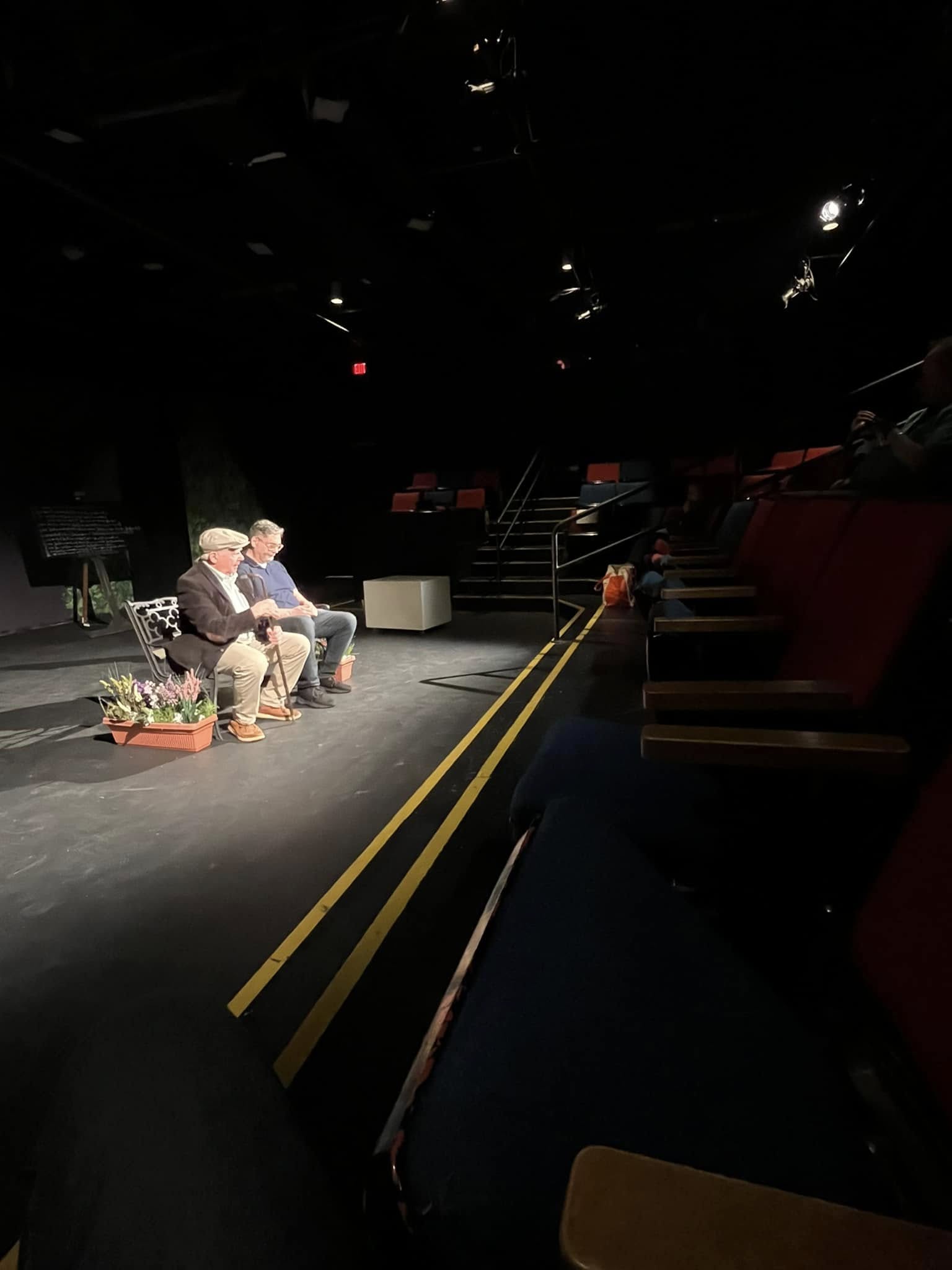
And the audiences were great. Friday and Saturday were approximately 2/3 to 3/4 filled–and Sunday was a sell out! All of the crowds seem to respond well to the energy of the cast. I was touched by how many people I knew personally attended: not just many local friends, but several of my work colleagues, former students, members of the Connecticut playwriting community, cousins from as far away as Maine, members of our hiking club in New York, other friends from as far away as Philadelphia and Virginia–even two members of my old Sea World crew came down from Boston. It represented quite a mosaic of the various aspects of my life. And, everyone seemed to react very positively to the play, which was intensely gratifying.
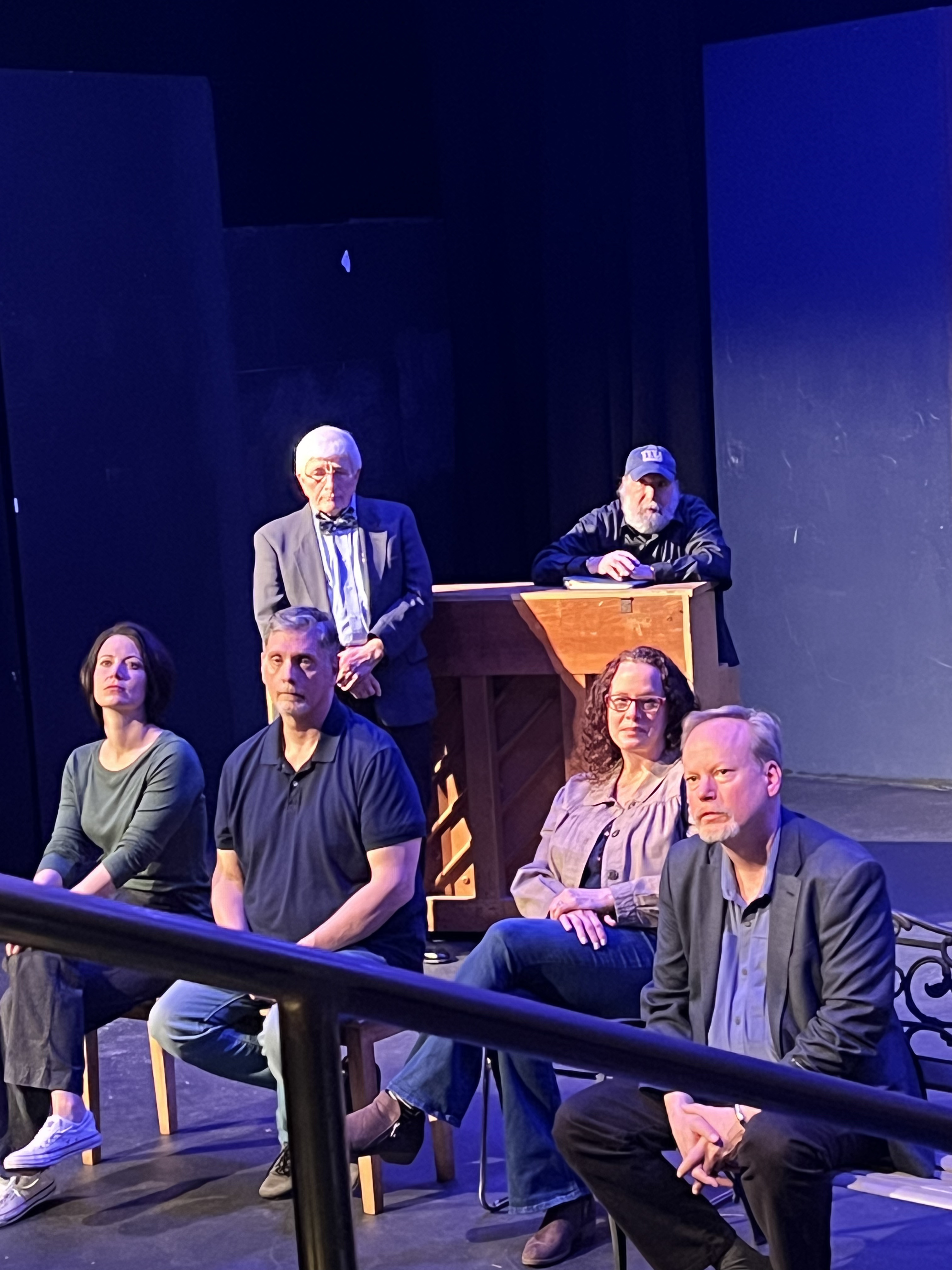
On Sunday, the final performance, we had a talk back with the audience, which was incredibly enjoyable. I really liked discussing and reflecting on the work, even knowing we had finished. I appreciated what the audience had to say, enjoyed answering their insightful questions, and it was fun to essentially be on a panel with the cast.
And then it was over. Everybody went home, and while we are all still in touch, and I have seen several cast members doing other productions since, I do miss the weekly rehearsals, the performances, the camaraderie. I had only done 24 hour play festivals, so I never really had a chance to learn so much from this process and bond with a cast and crew. I know it won’t be my last time, but I will always cherish the first time it happened.
Just gotta keep writing more plays.
Producing “Invincible Summer” for the Stage, Part One
It took a long time to get here.
We did a Zoom reading in 2021. We had a production scheduled in late 2002, and began rehearsals over the summer. But they the theatre changed their mind and canceled our production.
We had a production booked in another theatre in June 2023, but the deal eventually fell apart.
Late in 2023, we received word that the Hole in the Wall Theatre in New Britain, Connecticut wanted to produce the play. I was excited about the possibility, but leery–when is the rug going to be pulled out from under us this time?

But that didn’t happen. I guess the fourth time’s the charm. Well, fifth actually, because “Invincible Summer” was accepted into a Brooklyn, New York theatre festival which was going to produce the play …in summer 2020. So, no.
Through all of that, the director of the Zoom reading (Dana Sachs) stuck with the project and was instrumental in getting to the Hole in the Wall Theatre. His wife, Cynthia Parisi, acted as our stage and prop master, and worked closely with Dana, myself and the cast to ensure the vision we wanted was presented on the stage. And most of the actors from that Zoom reading–Mark Gilchrist, Christie Maturo, Allan Church, Frank DiCaro, Elizabeth Harnett, Lois Lake Church, Jerry Rankin, and Valerie Solli–all stuck with the play through its ups and downs and the false starts. Every time Dana went to the cast and said we’re doing “Invincible Summer” they were in.
Our production was scheduled for early May, so in March we began devoting our Saturdays to rehearsals in Dana and Cynthia’s living room. Dana very generously allowed me to be a part of every rehearsal, which gave me a chance to get to know the actors, but also to pay attention to how Dana works. I learned a lot watching his approach to the material, his vision for the play, his instructions to the actors, and his ability to successfully guide the cast through the production.
I also enjoyed discussing the characters and the story with all of the actors, and learning what they were bringing to each of these characters. So many of the actors had great suggestions, thoughtful questions, and I did my best to be open to any ideas or changes they might suggest. I really fell in love with the collaborative aspect of producing the play. Writing it is such a solitary experience–but working with Dana, Cynthia and the cast to make this the best possible show was exhilarating.
Everyone worked very hard, but we also laughed a great deal. I took that as a positive sign. I did not perceive it as a sign the cast were not taking it seriously–it was a sign of camaraderie, and evidence the actors were enjoying themselves. I also noticed that lines of dialogue were playfully finding their way into the ordinary conversations between the cast members. I asked Mark if that was common during rehearsals, and he confirmed that it was–but only if the actors are enjoying what they are doing.
My favorite example of the cast’s morale was a prank they pulled on Dana. Dana informed the cast that they would need to come to the following week’s rehearsal wearing the costumes they had chosen for their characters. The following Saturday, the cast arrived at roughly the same time dressed like this:

I already knew the cast was talented and hard working, but one thing was abundantly clear–they are just great, fun, people.
I couldn’t have asked for a better company. And after nine weeks of rehearsal…it was showtime.
Mid-Year Review
This has been, without a doubt, the most exciting year I have experienced as a writer.

It began with the news that my drama, “Ravine” finished third in the StoryPros Screenplay Awards. Six months later, my romantic comedy “Outclassed,” would finish second in the same contest.
In March, we began rehearsals for my stage play “Invincible Summer” in preparation for a production the first week of May at the Hole in the Wall Theatre in New Britain, Connecticut. I only missed one rehearsal, when I flew to New Orleans to attend the Tennessee Williams New Orleans Literary Festival–because I had won the one act play contest. A staged reading of the play was performed at the festival, and it will be published later this year by Bayou Magazine, the literary journal of the University of New Orleans.
I also received word from the Depot for New Play Readings will be doing a Zoom staged reading of my play, “Save the Man” for their autumn/winter schedule.
In April, rehearsals for “Invincible Summer” continued, and in May was the performance. I haven’t yet written about it, but that will be the topic of my next blog post. It was a wonderful experience, and I am so proud of the cast and crew that brought my work to life.
Also in April, a Zoom table read of my screenplay was held thanks to the good people at Actors’ Think Tank.
In June, I learned that my screenplay “Season of Mists” was in consideration by three different production companies.
In July, I learned that my screenplay, “Leviathan” was named a finalist in the Philadelphia Unnamed Film Festival. Six minutes later, I received word that my stage play, “Save the Man” is a finalist in the Mystic Film Festival. I will be attending both festivals, which are the final two weekends in September.
I also learned that two of my stage plays were accepted for the Off Page Film Festival, also in Philadelphia. Since they festival only selects one play per playwright, I was asked which one I would prefer to see move forward and be performed at the festival. I have selected my play, “All Sales Final,” because it is new (I wrote it in January) and I am anxious to see and hear it on stage. The festival is in November, and I will be attending.
And guess what? It’s not even August yet. I can’t help but wonder what the rest of the year will bring…
So today was it. I’ve had a wonderful time connecting with friends, making some new ones, learning from other terrific authors, and attending some wonderful performances. But today was the day I would get to see my winning play performed at the award ceremony.
Since the first event for which I signed up didn’t begin until 11A.M., I was able to have a leisurely morning. I arrived at the Hotel Monteleone in time to see the NOLA Project perform a staged reading of three Tennessee Williams One Acts. The plays chosen for performance were “In Our Profession,” “Auto Da Fe,” and “Every Twenty Minutes.” Given the big event was going to be the staged reading of my one-act, this seemed like a very appropriate way to begin the day. I wasn’t familiar with any of the plays, but the actors from the NOLA project did a lovely job. The reading also occurred in what was essentially the penthouse of the hotel, so there was also a panoramic view of New Orleans to be enjoyed.

After the play reading, it was time for some poetry, and this discussion was a long elevator ride down to the first floor. The topic was Rendering the Landscape in Poetry, and featured three poets whose work I enjoyed immensely: former Alabama poet laureate Rodney Jones, current Louisiana Poet Laureate Allison Pelegrin and schoolteacher/poet Christine Kwan. All of them were excellent; I think Rodney’s poetry spoke to me the most, and I ordered a copy of his most recent collection upon my return home.
Normally at this point, I would have found something to eat, but I had a serious case of butterflies before the reading. I decided then to defer eating until after the awards ceremony and the play reading. Happily, my friends Amanda and Kara both attended the reading, and both being actor-writer-directors and both being totally awesome, got on very well. When I confessed that it was so strange knowing my work was going to be performed without any communication with the director or the actors, Kara–who has been involved in theatre longer than I–informed me that this is much more common than being treated as a collaborator. This was a feeling, then, I perhaps needed to get used to.

The awards ceremony involved more poetry from Allison Pelegrin, as well as a reading from Tara Lynn Masih, the Very Short Fiction Judge. All of the winners in the poetry and fiction categories were recognized, and then, finally, the staged reading of my play, “Leviathan.” The play was directed by David Hoover, a theatre professor at the University of New Orleans, and features only two characters: Father and Son. Mr. Hoover read stage directions. Overall, I was pleased with the reading. The actor playing Father was not particularly strong–I am uncertain if he was cast late, but he seemed as if he were encountering the script for the very first time. The young man who played, Son, however, was superb, and moved the audience with his emotional performance. Sadly, I never got to meet the actors, and did not even catch their names. I met Mr. Hoover very briefly, who followed up with a nice email. Not being able to meet and have a conversation with the director and actors was my only regret from the experience. Still, traveling a great distance to this remarkable literary festival and experiencing my play as a culminating activity? There aren’t a lot of things better than that.
After the reading, it was time for some food, so Kara, Amanda and I walked over to Louis Armstrong Park, where the New Orleans Rhythm Festival was in full swing. With a jazz, soul and funk soundtrack playing behind us, we sat down for a late lunch (I had some real New Orleans rice and beans, and they did not disappoint) and the three of us had a lovely time hanging out. We also got to see the Mardi Gras Indians in their elaborate, beautiful costumes–some of which take nearly a year to construct–and they were a wonder to behold. Eventually, I had to part ways with both Amanda and Kara, but not without expressing my gratitude for their support and their excellent company.

It was then time to experience my final event of the festival, and the final performance of a Tennessee Williams work. This performance was presented and performed by a theatre troupe called The Fire Weeds, and it was entitled “Outraged Hearts: The Pretty Trap and Interior: Panic.” These were performances of short plays, but they had the distinction of being early versions of “The Glass Menagerie” and “A Streetcar Named Desire.” It was an interesting experience, to be certain–the first play was performed in a traditional space (although the actors often worked amongst the audience). Afterwards, we were moved to another room that was set up in a horseshoe around a small kitchen set, and featured some of the actors performing through a video feed. While I appreciate the attempt to stage these works in a non-traditional manner, I am not convinced all of it worked. Instead, it seemed to present something of a distraction from the stories being dramatized. I will say the actors were very strong and threw their hearts into their performances.
And that was the end. I caught my rideshare back to my Vrbo, knowing that tomorrow a plane would take me back to reality. I have been to film festivals, and some literary festivals before, but I have never had an experience like the whirlwind of the Tennessee Williams New Orleans Literary Festival. It will be a treasured memory for the rest of my life.
And who knows? Maybe I will be back.
After the long but great Friday, I slept very well in the Vrbo. So clean, with snacks, and a comfortable bed. Like I said, perfect.
There was a lot on today’s docket, but first was a Tennessee Williams walking tour of the French quarter. Whilst waiting for the tour guide to come collect us from the meeting spot, I met a very nice gentleman from Florida name Larry. We were having a very nice chat, and when I told him that I was the play competition winner, he got very excited. In fact he, insisted on getting a selfie with me. I have, suspicion, however, we less star struck and instead thought I was kinda cute. Shortly thereafter, we were met by the tour guide and headed out on our neighborhood journey. We visited several of the apartments Williams lived in, and learned the phrase “Shoebox Apartment.” This is not to suggest the apartment was small, although it certainly was–it referred to the fact that a tenant had to be prepared to shove all of their belongings into a shoebox and sneak out quickly. This was a necessity when the landlord would show up to collect past due rent. This is the sort of vagabond life Tennessee lived during his first time in New Orleans. One of the stories about one of these residences involved a jilted sailor out on the street shouting up to the playwright’s apartment: “Williams you bastard, you gave me crabs!”
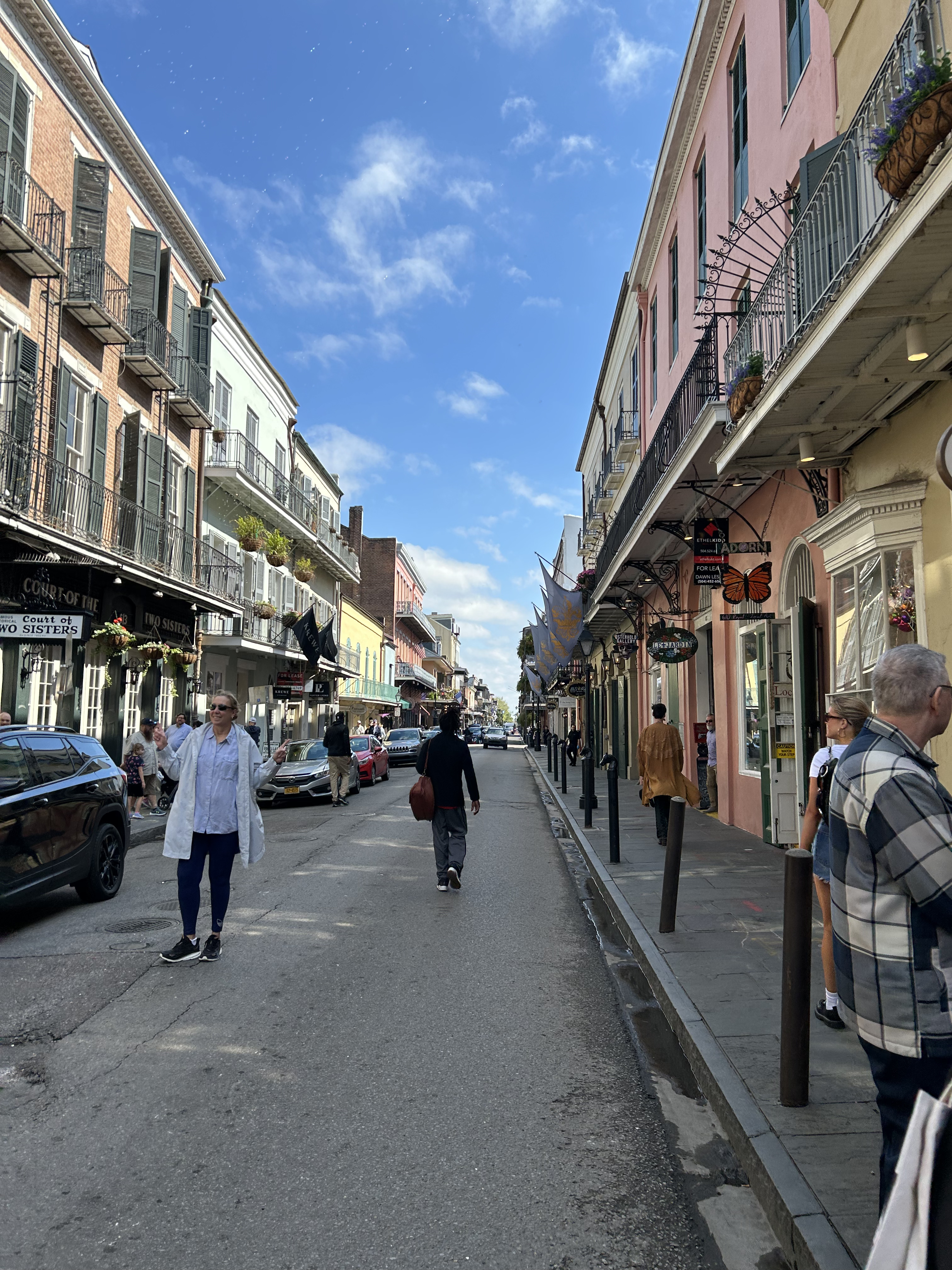
I also learned about the Chinese and Italian histories in New Orleans–in fact, Stanley Kowalski was originally written to be Italian, but there were too many broadway plays running at that time featuring Italian villains, so Stanley was “WASPed” up. The tour guide also shared the fascinating factoid that the most common language spoken in New Orleans in the 1850s was German. As the tour guide put it, “Who do you think put sausage in all of our food?”
After the tour, I had three literary discussions I wanted to be sure to attend, the first of which was on Writing Southern Gothic in Modern New Orleans. I loved the discussion, and in particular loved learning about novelist Alex Jennings new work, “The Ballad of Perilous Graves.” In the novel, nine powerful songs have escaped from an important piano, imperiling the city of New Orleans. It falls to an 11 year old magician to find the songs and return them to the piano. Complicating the fact is the songs all think they’re people. It’s the kind of idea I wish I had thought up.
Following that I attended “History is My Muse: Finding Inspiration in the Past.” I was fascinated with several of the authors at this discussion, including Julia Mayle’s “Pelican Girls,” about poor women shipped from France to the Louisiana Territory to father to children of French colonists; Maurice Carlos Ruffin, who imagines his female ancestors were Union spies in “The American Daughters;” and perhaps most intriguing was Wendy Chin Tanner’s novel “King of the Armadillos,” which draws upon her father’s experience at the very last leprosarium in the United States, which just happened to be in Carville, Louisiana.
Next, I headed to a discussion between Maureen Corrigan and Colm Toibin. One of the great things about Colm is that he answers every question with a story. He discussed the intersection of history with his fiction, the challenges of admiring someone’s work whom you find personally repugnant, and his sequel to “Brooklyn.” (Fun fact about the film adaptation: it was the first time Saoirse Ronan played an Irish character). Even though Colm is a college professor, he doesn’t teach writing; he teaches literature, and finds that there is still joy in teaching difficult works like “Ulysses.” He find that each generation of young readers sees the book differently and develops insight he never considered, keeping the works fresh and exciting. I definitely want to study literature with Professor Toibin.

Now it was dinner time, which mean time to meet up with my friend Kara Krantz. I hadn’t seen Kara in ten years, shortly after meeting her for the very first time. She was directing one of the plays at my very first Play in a Day Festival, and since then, we’ve only been connected by social media. This would be the first time we’d have an actual conversation since the second Obama administration. Not to worry: Kara was great to talk to, and I enjoyed her company very much. We had a lovely dinner and it was great to reconnect. Kara would also attend the play reading on Sunday.
But there were to more places to be before my return to the Vrbo. I headed to a local theatre called The Twilight Room to see a one man show, entitled “Tennessee Rising: The Dawn of Tennessee Williams.” Actor Jacob Storms performed as the great playwright, chronicling his “Shoebox” period right through to his Broadway debut. Storms was phenomenal, and once the play ended in 1946, I really wanted it to continue. The play was followed by a talk back, wherein Storms discussed his acting and writing process, and how director Alan Cumming helped him refine the narrative.

And finally, I headed over to The Temple, the former home of Alistair Crowley, now owned by actor John Cameron Mitchell to see a performance of “Nightingale.” Performed by actor-musician Vinsantos, “Nightingale” was a powerful blend of monologue and music, inspired by Vinsantos’ own life and a minor character from one of Williams’ plays. Aside from being a strong actor, Vinsantos is an excellent pianist–like, Rick Wakeman good. After the show, Mitchell came out to do a talk back about the show, which Vinsantos clarified was still in the workshop stages. Mitchell was lovely, and very patient with me when I ran into him in the hallway and gushed, “You were so good in ‘Sandman!” (in my defense–he was). He also congratulated me on my playwriting award.
After the fullest of full days, I rideshared my way back to the Vrbo, and drifted off to sleep, knowing that an even bigger day awaited on Sunday.
Tennessee Williams New Orleans Literary Festival: Day One
March 22, 2024
Normally, if my alarm happens to go off at one in the morning, it’s because there was some sort of mistake. Not today.
My flight was scheduled to leave Boston at 5:45 in the morning, and I don’t like to arrive at an airport less than two hours before my flight leaves–especially at a busy airport like Logan (one time, I arrived two hours early for a flight out of Rhode Island’s T.F. Green airport–and the airport hadn’t opened yet. So not a necessary strategy for all terminals). And Boston was a two hour drive from my home, so I needed to get out the door by 1:30.
Interstate 95 is one of those roads you assume is always going to be busy, even in the middle of the night. Even if there aren’t a lot of cars, you imagine the trucks rumbling through the night, keeping those supply lines open. Not this night. I-95 was strangely quiet. Driving in the time of Covid quiet. As odd as it was, I was grateful because it meant a smooth trip to the parking lot wherein I had arranged to leave my car.
Unfortunately, the lot where I had parked informed me that their free 24 hour shuttle doesn’t run between midnight and 4 a.m. This fact was conspicuously missing from their website–I suppose “Twenty hour shuttle service” doesn’t have quite the same ring to it. The parking attendant told me that if I waited until the 4 o’clock shuttle, I’d still arrive in time for my flight “as long as his driver shows up on time.” That didn’t exactly fill me with confidence. Given I’d also be waiting in twenty degree weather, I decided to check my rideshare app, and find another option. I was dropped off at the airport, made my plane in plenty of time, and began my trip to New Orleans.

I was greeted at the airport by my friend Amanda, who offered to pick me up and take me to my Vrbo. Amanda and I took the Independent Film School mentorship program together, and until she greeted me near baggage claim, we had only known each other as faces on a Zoom screen. Amanda is even more delightful in person; it felt a bit like meeting an old friend for the very first time. She dropped me off at my rental, which was fortuitously very close to her home. On top of that, she told me she would be attending the play reading on Sunday.
My Vrbo was immaculately clean, and had snacks! In other words, just perfect. A shower, a change of clothes, and I was on my way to the French Quarter and the Hotel Monteleone, the headquarters of the Festival. I was enthusiastically greeted at the registration desk, presented with my VIP pass, my tote bag, and my prize money. With that, I headed to my very first session: Michael Cunningham on character.
Some authors are terrific at writing but not particular good as discussing their work. Others seem like natural born teachers. Michael falls into the latter category. He is energetic, charismatic and comfortable talking to a room full of people. He emphasized that when his students say “they aren’t very good at plot,” what they are really saying is that they haven’t developed their characters. He demonstrated that when you fully develop a character, the plots begin to arrive. He also pointed out three very important questions to ask about your character: what does the character want, what do they fear, and what is the one secret they don’t want anyone to know. I have had writing teachers express this in a variety of ways; I enjoyed the precision in how Michael conveyed this to us.

After my first dose of Michael, I got a bit more. He and Justin Torres were in conversation with NPR’s Maureen Corrigan, and even though I haven’t read Justin’s work, I enjoyed their discussion a great deal. Michael told a funny anecdote about the film adaptation of “The Hours.” He wasn’t seeing eye to eye on a plot point with screenwriter David Hare and director Stephen Daldry. Unable to persuade Hare and Daldry to change their approach, he enlisted the help of Julianne Moore. Once she took Michael’s side, the debate was over. The moral of the story? “If you are losing an argument, call a movie star. ” I also ran into Michael in the elevator. He was lovely, and congratulated me for winning the playwriting award.
After that, I had an omelet at a nearby café (and for dessert had the New Orleans donut–the beignet. Evidently, you are not permitted to purchase fewer than three at a time. What a shame. ) In the evening was the VIP reception, and I had a great time chatting with a couple from Omaha. She’s a creative nonfiction writer, and she came to the festival to reclaim her writing mojo; her husband was there to offer moral support. I found them to be so captivating, I ended up talking to them throughout the entire reception.
I had time to kill before a production of Tennessee Williams, “This is the Peaceable Kingdom” so I sat at a Bourbon street café sipping tea. There was a jazz band playing behind me, but out on the street was a group of young men drumming on plastic paint buckets, whilst at the other corner a DJ had set up his gear and on the other corner was a cowboy with a karaoke machine singing country ditties. It is a cliché, arguably the worst cliché, but I think there is no other way to put it:
Only in New Orleans.
March Madness
To be clear, this is not a post about college basketball. This is a post about the joyful stress that was my March 2024.
As the month began, I already knew it would be a busy month. March 2nd was the first day of rehearsals for my play “Invincible Summer,” and we would be rehearsing each Saturday until the performance in May. Being a full time teacher, and living over two hours from Darlene, it was clear that managing time this month would be a challenge. But it was in service to the first production of my play, which, after several near misses, was finally going to make it on stage.
March is also one of two months of the year where the “Playwright’s Binge” is observed–September being the other month. If you are not familiar with the Binge, the playwrights who participate agree to submit a play or query or another piece of writing to a contest, festival, theatre or publication. By the end of the month, they should have sent out 31 submissions. While that could be time consuming, sending out one thing a day is very manageable, even if you work full time. So, that was the plan–a daily submission, rehearsals every Saturday, and Darlene and I would do the best we could to see each other. It will be hard, but it will be fine.
Besides, it’s not like several other things are going to happen this month, is it?
The first thing that occurred was the news that my play “Save the Man” was accepted by the Depot for New Play Readings for their 24-25 season. That was exciting, but not really time consuming. Worth celebrating, but hardly a disruption.
The next thing was that actor Rich Henkels and I finalized our plan to do a Zoom table read for my screenplay, “Leviathan.” We met at the Off Page Film Festival in November, and decided that we would do the reading, with Rich’s acting group (Actors Think Tank) comprising the cast. After several months of back and forth emails, we settled on Tuesday, April 16 to do the reading. I put together a list of roles for the cast, and recruited the amazing Shonita Joshi to read stage directions. It was a bit of extra work as expected, but very manageable, totally exciting and worth it. So far, so good.
And then the calendar turned to March 12.

I had received an email in late February from the Tennessee Williams New Orleans Literary Festival informing me that I was a finalist in the One Act Play Competition, and that winners would be announced soon. That was a great honor, and I was pleased, but being a finalist wasn’t enough a motive for me to attend the festival–it was March 20-24. Besides, by the time we got to March 12, I knew that I had not won–after all, if I had, they certainly would have told me by now.
Then the email arrived: “You won!” Mind you, my excitement was tempered a bit by the message, given that it was addressed “Dear David.” I quick inquiry, and an apologetic note for the mistake, with confirmation I, Kevin, was indeed the winner. I would receive a cash prize, a pass to the entire festival, and a staged reading of my play. There was no real option now–I had to be there.
A hastily arranged Vrbo was secured, a reasonably priced flight was found (although it did not depart nor return to Boston at a reasonable time) and airport parking was arranged. I was in business, and ready to spend four days in New Orleans. On top of everything else.
So, yes, things got crazy. And my experience at the festival will be chronicled starting with the next post.
Off Page Film Festival
If you are a regular reader of this blog, you know that I love attending film festivals–particularly if a script I have written has placed me in one. I’ve been to some large festivals–Austin , Cinequest in San Jose (currently hopeful for a return trip in March) and some small ones (VisionFest in Tribeca, Mystic Film Festival in Connecticut). But I have never been to one as new as Off Page in Philadelphia. I attended the second annual festival in November, because my screenplay, “Leviathan”, was selected as a finalist. So, I hopped on Amtrak, checked into what is likely Philadelphia’s cheapest hotel, and made my way to the Venice Island Performing Arts Center.
Being small and new, the festival only lasted a day. But the nice things about smaller festivals is that it is easier to take in more (if not all) of the program and much easier to make connections and enjoy conversation with other creative types and film lovers. Although this wasn’t always the case, I have become the type of person who is comfortable starting conversations with strangers in these types of venues. Some of my favorite people on earth I have befriended at film festivals. Indeed, one of the primary organizers of Off Page, Brigette ReDavid, I met in Austin four years ago.
The program at Off Page was primarily shorts and trailers. And like most film festivals, the shorts were a mixed bag of quality, but there were some definite stand outs. “Astronaut” and “Tiger Hunt” (both directed by Brian McCole), “Millie’s Care Free Day,” directed by Michael Licisyn, a TV pilot called “Bad Atmosphere” directed by Mason Sperling and one of the best short films I have ever seen, “Self Tape” directed by Christopher Newhard. And even though my script did not win the award, it was overall a terrific day.
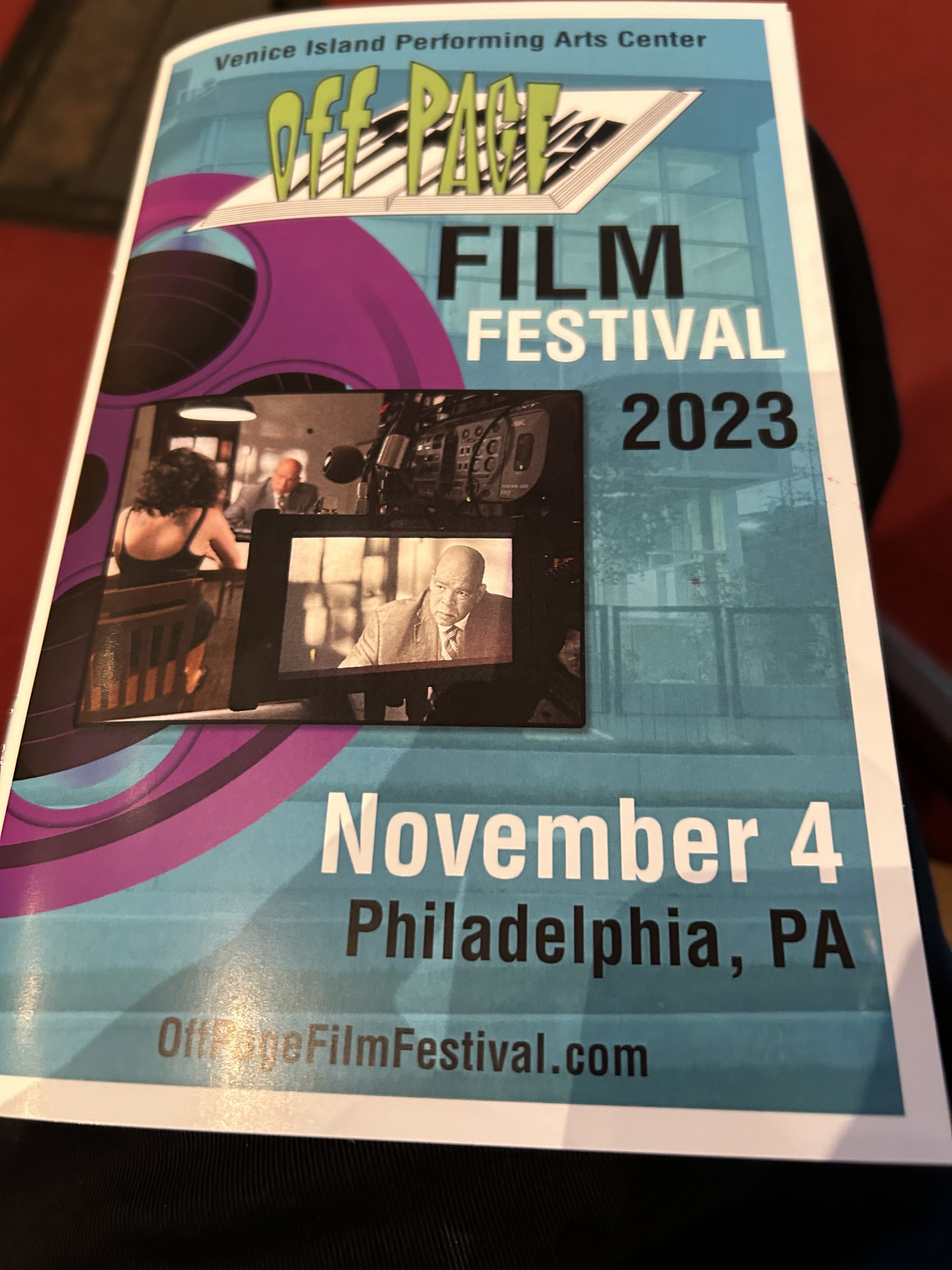
After the awards ceremony, we all retired to the nearby Manayunk Brewery for the after party. I got to chat with Brigette, whom I had not seen in person since Austin; I met Michael Licisyn, and talked with him enough to learn that he is the official videographer for the Philadelphia Phillies; I chose not to disclose to him that I am a San Diego Padres fan, because I had no desire to revisit the 2022 Major League Baseball playoffs (good for the Phillies, bad for the Padres). Aside from being a very astute filmmaker, Michael is witty and intelligent, and a great person to have a conversation with. I met writer David Laserson, who had the distinction of beating me in the feature screenplay category; we recently reconnected on LinkedIn and agreed to share our work. I also met Mason Sperling, and learned that “Bad Atmosphere” was completely improvised, and the NASA training facility set used in the show was constructed in his garage. I also got to meet Christopher Newhard, who I ended up engaged in a compelling conversation, wherein I learned about his life as a filmmaker, a rock musician, and a husband. He explained how “Self Tape” was in many ways a love letter to his wife (the ludicrously talented Robbie Jean, who stars in the film) after bearing witness to her struggles as a working actor. I also met the distinguished and highly skilled Rich Henkels, who appeared in several of the films at the festival (clearly a popular acting choice amongst Philly filmmakers). I learned Rich works with an acting troupe, and he offered to have his actors do a Zoom table read of “Leviathan.” I accepted his offer with gratitude and great enthusiasm. Hopefully, that will happen over the next few weeks.
Small it may be, but it is clear the Off Page film festival attracts very talented artists, some of whom I am very pleased to call my friends and acquaintances. I am optimistic about the festival’s future, and I look forward to returning.
An Act of Love
Like most humans, my life has been filled with ups and downs, ebbs and flows. I haven’t had too many of what I would describe as truly awful or terrible days. December 2, 2023, though, would turn out to be one of the worst.
It was on that day that my wife Darlene and I had to make the excruciating but necessary decision to euthanize Lollie, our English Shepherd.
To be fair, Lollie was an old dog. She was just a few months from her fifteenth birthday, and feeding her twice a day had become a project, given all of the medications and supplements that had to be added to her food. Mostly, they had to do with brain health, arthritis pain, urinary tract infections, incontinence and the like. We had nearly lost Lollie to pneumonia a year earlier–a battle she had won against the disease despite a nine day stay in the hospital.
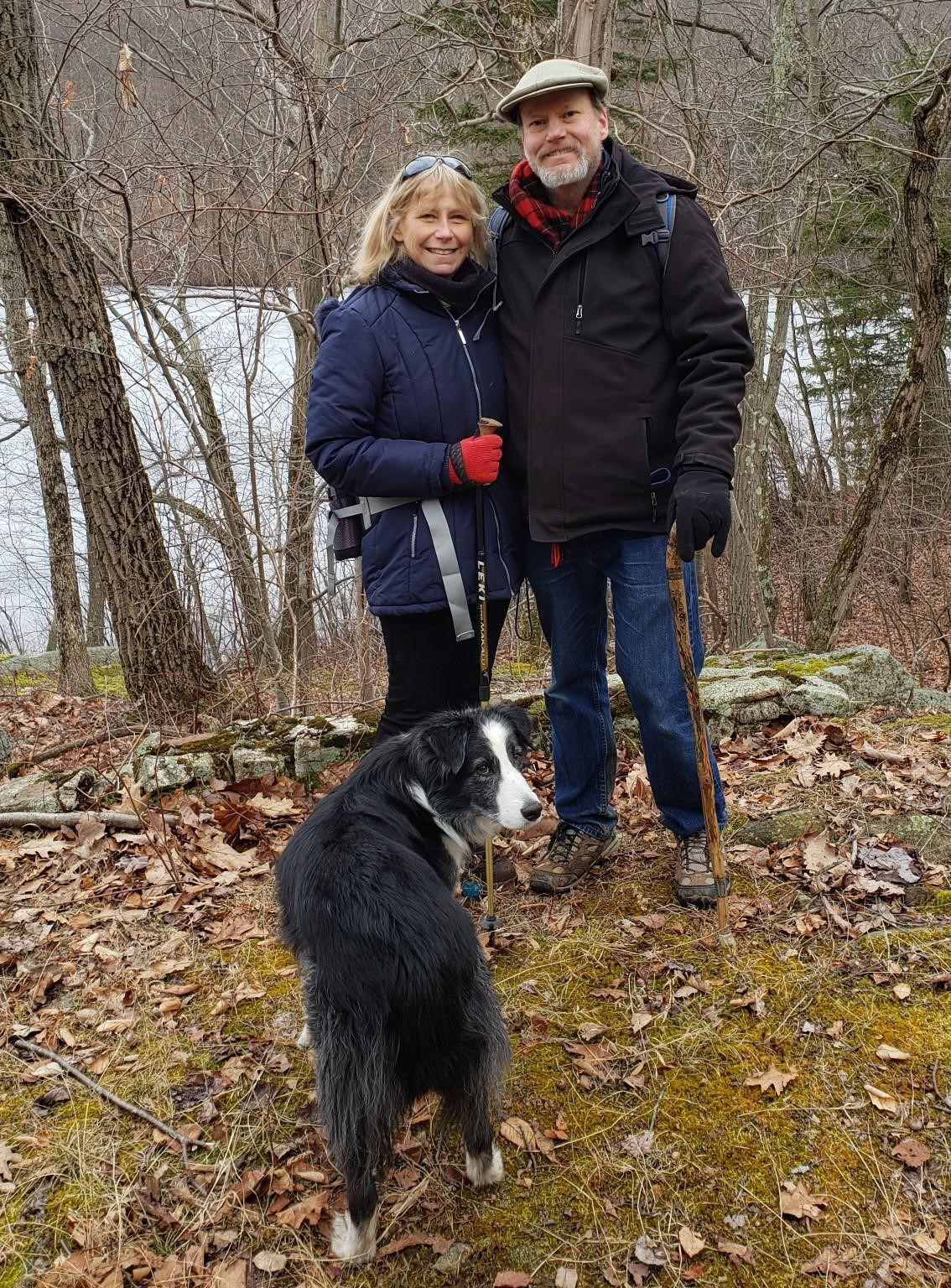
So we knew the time was coming. And it is easy to allow ourselves to be fooled, because the truth is, that’s what we want. She has a good day, and we think the medication is working, and even though we know the day is coming, we think at least it won’t be soon. The fact is, Lollie was having a really good day–until she wasn’t.
A Friday night trip to the emergency vet indicated what we didn’t want to hear was likely at hand. A failed hail mary treatment, followed by a sleepless night from all three of us, left really only one decision left to be made in the morning. The fact is, Lollie couldn’t walk without losing her balance, she needed to be carried in and outside the house to do her business, and perhaps worst of all, she was frightened and anxious, unable to understand what was happening to her.
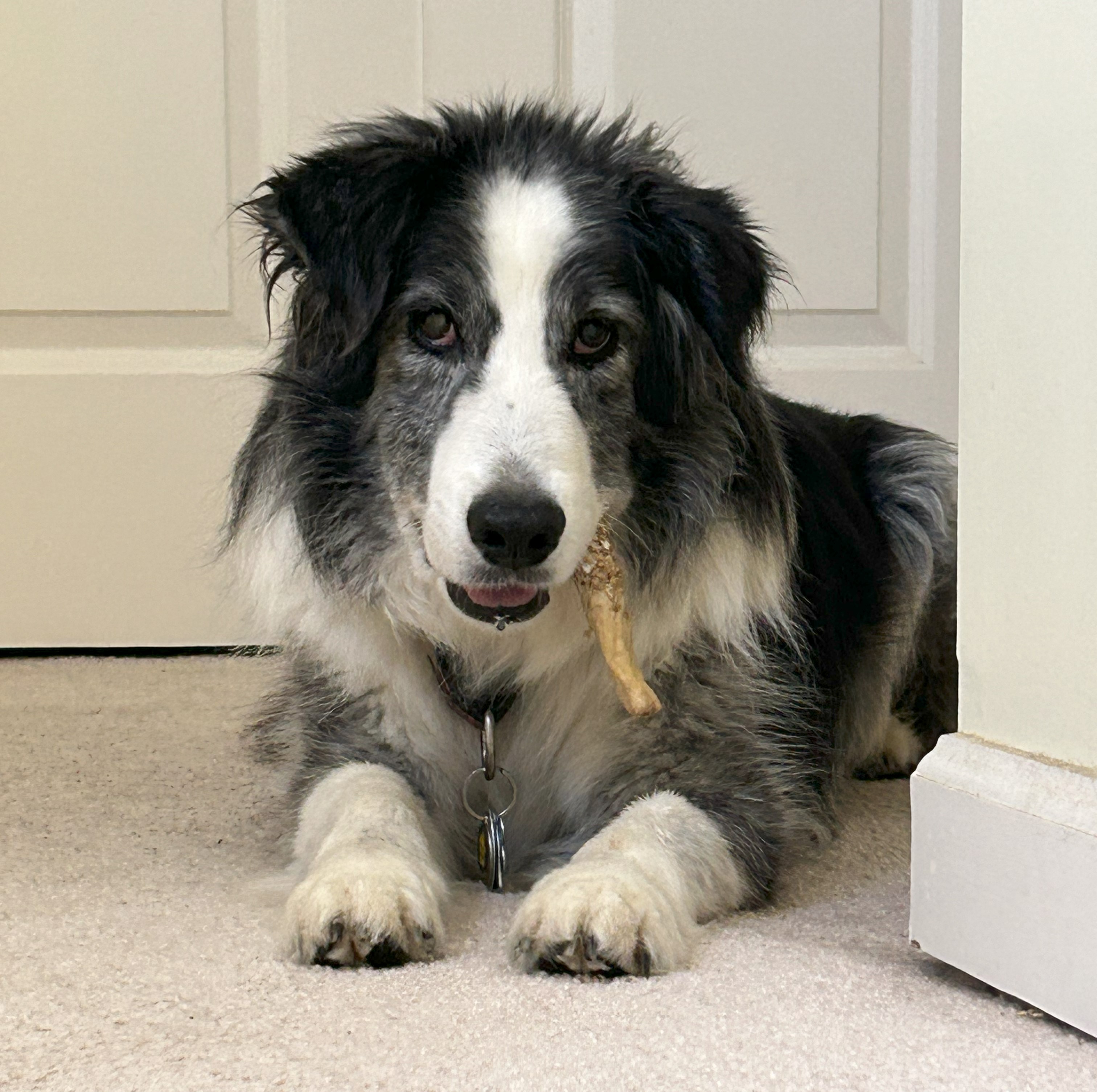
Even though I knew it was her time, I still didn’t want Lollie to go. And at the risk of anthropomorphizing, I don’t think she wanted to go. Much as she refused to give in to the pneumonia that tried to take her the year before, she continued to fight what was happening to her. In spite of her condition, she kept trying to follow us around, and do her job: making sure the herd (Darlene and I) was organized and safe.
John Katz describes in his excellent book “Going Home” how we have to act as advocates for our animals. This means when they are at the point when their quality of life is gone, we have the responsibility as pet owners–as those that love them the most–to decide that it is time for them to go. It’s a huge part of why animals trust us to feed, house and love them. They can’t communicate this to the veterinarians themselves–we have to do it for them. Ask any animal hospital employee and they all have stories of pet owners who kept their pets alive in misery far longer than they should have because they couldn’t bring themselves to say goodbye to their beloved dog or cat. As tempting as that is, we have to remember that our pets are trusting us to be their advocates. As Darlene told me, “This is the most selfless thing you will ever do.”
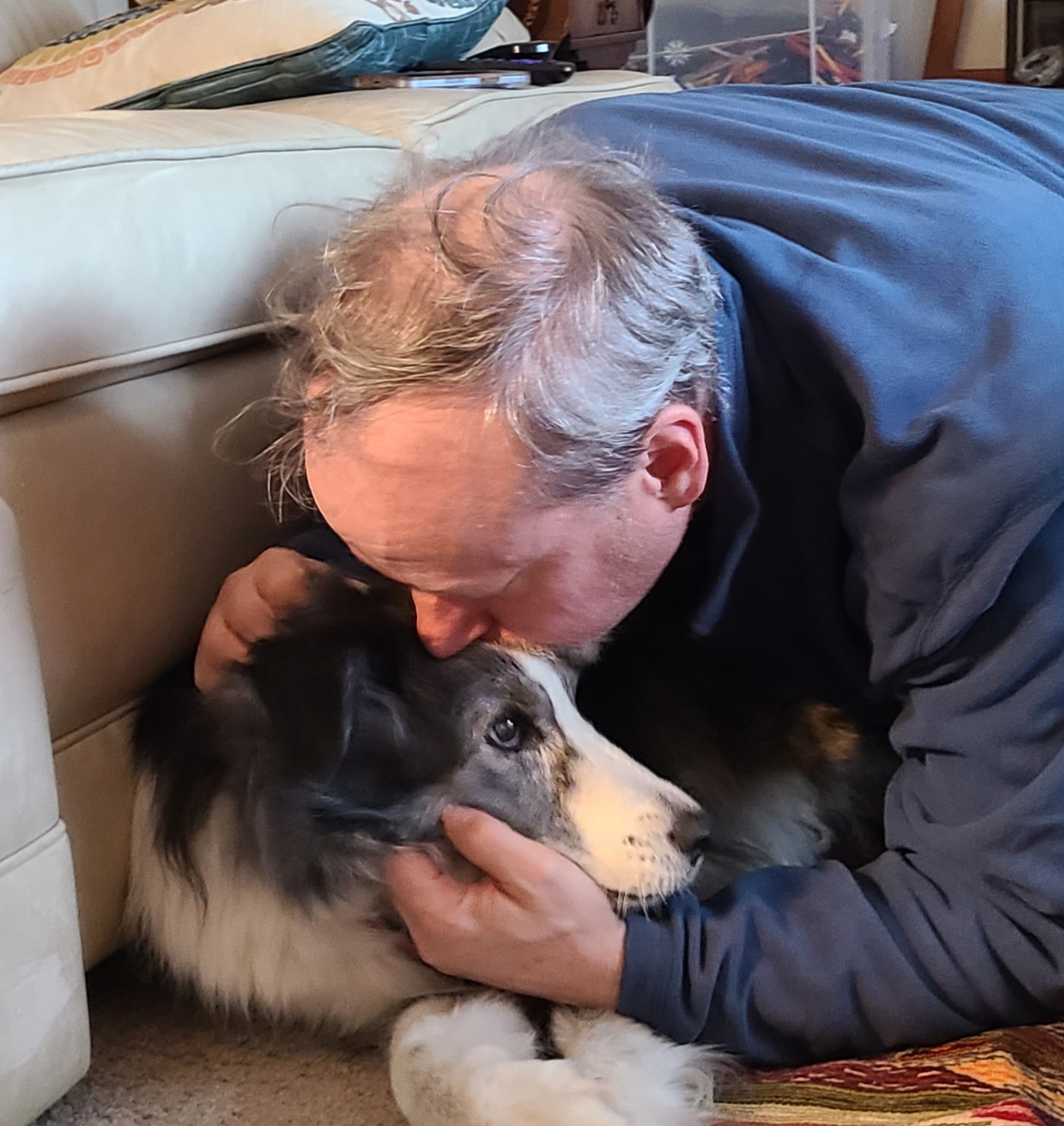
So we spent one last morning together. I fed Lollie two chicken breasts by hand, and then Darlene and I sat with her all morning, petting her, giving her chin and ear scritches, letting her know that despite how anxious she was, she wasn’t alone. When the time finally arrived, I carried her out to the car, and took the long, slow ride to the veterinarian. In one way, it was less than ideal, because the animal hospital may very well have been Lollie’s least favorite place in the world. But I am glad Darlene and I were with her, that we would be the last people she would see. If you are not familiar with the process, the vet gives two injections–the first is a sedative, which dispatches her to literal sleep, and then the second is an overdose of an anesthetic that sends her on her way.
I watched after the first injection, which sent her off to a much-needed peaceful sleep. I was happy her last memory wouldn’t be the pain and stress she had been feeling from her condition. I noticed her legs were pumping her through one final dream. I’ll never really know what that last dream, those last thoughts, that last memory was, but I hope it was of us hiking together, or one our evening walks, or her running up and down the stairs with her beloved busy bone, or playing in the yard with her favorite rope toy.
Actually, I have decided: it was all of the above.
.
 Danger Is My Business