A Disappointing Turn
I had mentioned in my previous post that my play “Invincible Summer” was being performed this fall at a local community theatre. Unfortunately, I have learned recently that the theatre had changed its mind about staging my play, citing the “inappropriateness” of my script for the theater’s target audience.
As you can imagine, this was quite the gut punch. Not only is it a grave disappointment to be told this, but how the theatre carried it out is perhaps the worst part. Back in June, a director I know called me to tell me that Nelson Hall Theatre in Cheshire, Connecticut had agreed to stage two performances of the play. The theatre’s entertainment director read and loved the play, and set aside a day in October for two performances. We knew Nelson Hall was a conservative institution, so I went to work doing some rewrites to satisfy objections they were likely to have. I had to remove some of the foul language and sexual references, and while there were some passages and dialogue I was sad to give up, I felt the play was still strong, and still worked as rewritten. I even had to change the ending, and decided what I came up with was even better than what I had. One of the things I learned writing plays for play-in-a-day festivals is that constraints can also be opportunities.
The director and I were happy with the changes, and we sent them off to the theatre at the end of June. In August, we began rehearsals, the tech and stage people at Nelson began working on the stage, sound and lighting, and the marketing department began working on the promotional materials. There was even a two week window left open on the theatre’s schedule for theatre rehearsals, tech week, and the performance. Everything was in motion–and then the plug was suddenly pulled.
But what really pissed us off was the fact that Nelson Hall had the script for two months, allowed all of those balls to be put in motion and then they finally decided to tell us they don’t want do it. Why the fuck couldn’t they have told us that in July? Or, at least given me the opportunity to address any further concerns they had in the script? But instead, they decided the best course of action was to handle it this way.
I guess I am not completely surprised by their reaction. A director who worked there once told me that he was directing “Arsenic and Old Lace” at Nelson and they asked him to take out the part where two engaged characters kiss because they were not married. My play also has a kiss between unmarried persons, references suicide, divorce, and includes a joke about a bris and another about an STD. So, from that perspective, I could see their objections–but then why agree to do the play at all? Especially when so many people–with whom they both contracted and whom they employ–had began working so hard.
I think the primary reason is that the entertainment director who contracted with us to do the play quit working at Nelson Hall this past summer. I think at that point the play lost its champion on the inside. Perhaps she thought she could navigate the play through those who would object. I suppose we’ll never know. One thing I do know: Nelson Hall’s supposed religious values clearly don’t include competence and treating people with whom they hire with respect.
And I do realize writing these words in public means I have ruined any chance of working with them again. However, it appears clear that my work will never be a good fit for them as it is. Thus, if I just burned my bridges, I have to say I don’t think I’ve ever enjoyed a fire more.
I don’t wish to leave it there, though, because there is good news: the director and the cast are very enthusiastic and really want to perform the play, so we are determined to find another venue. I can take the best of the earlier version of the play with the revisions I did for Nelson Hall and create a strong fusion of the scripts, especially if we find a theatre acutely aware of what century this is. I have to say I am touched by the energy and enthusiasm of the actors–their dedication honors my work in ways I could never truly express. I learned so much watching the director work with the actors, and I was moved to tears at one point because it became abundantly clear how much he truly gets my play–on every level. That was a new experience for me.
I am very lucky indeed to have such amazing, creative people interpret my work, and I look forward to the day we can be on a stage and share it with the world. Or at least, our little corner of it.
Note: I have intentionally left the name of the director and actors out of these piece, in case they wish to work for Nelson Hall again. I don’t want to ruin any future employment for them by being associated with my uh….shall we say, brutally honest critique?
Some Catching Up
I can’t believe it has been seven months since my last post! I can assure you that’s not because there has been nothing happening. Quite the opposite, in fact.

–I mentioned in an earlier post that I am working with filmmaker Ela Thier on the development of a television series. That work continues.
–Through Ela, I also enrolled in a writing/filmmaking mentorship program. That occupied me from early February until the end of July.
–Thanks to the mentorship program, I worked on a new revision of my screenplay “Season of Mists” and organized a table read in May.
–Thanks to the revisions for “Seasons,” it was a finalist in two contests: Table Read My Screenplay and the Mystic Film Festival.
–I also wrote the first draft of another feature screenplay. Currently at work on the second draft.
–Through my new friends in the mentorship program, I attended a film festival in Brooklyn and got to meet several of them in person–not just on a screen!
–I found out my stage play “Invincible Summer” is being staged for a production this fall. Rehearsals start this Saturday.
–In July, Darlene and I flew out to San Diego to take my mother’s ashes out to her final resting place in the Pacific Ocean.
–I attended three concerts (or five, really): Marillion weekend (that was three), Jon Anderson, and Belew, Fripp and Mastelotto–probably the closest to seeing King Crimson perform live as we’re going to get at this point.
–And I have certainly been paying attention to the madness that is gripping certain political sectors about Critical Race Theory, Moms for Liberty and the “grooming” of trans kids. I have many thoughts to share on these things as well…
–Oh, and Darlene and I eloped on a mountaintop in New Hampshire and had a honeymoon in Portugal!
All of these merit individual entries, and they are coming over the next few weeks. So please stay tuned–it will be worth it!
Thanks for sticking with me.
Millay Residency Photo Journal
Darlene and I are currently at our annual January writing retreat, after a one-year coronavirus induced hiatus. I decided to use this opportunity to do a final post on the Millay Arts residency we recently completed between Christmas and New Year’s Day.
Both of us took photos of the house in which we stayed and worked, and the grounds. A snowstorm simply enhanced that natural beauty that enveloped us. Several of the photos are shared below.
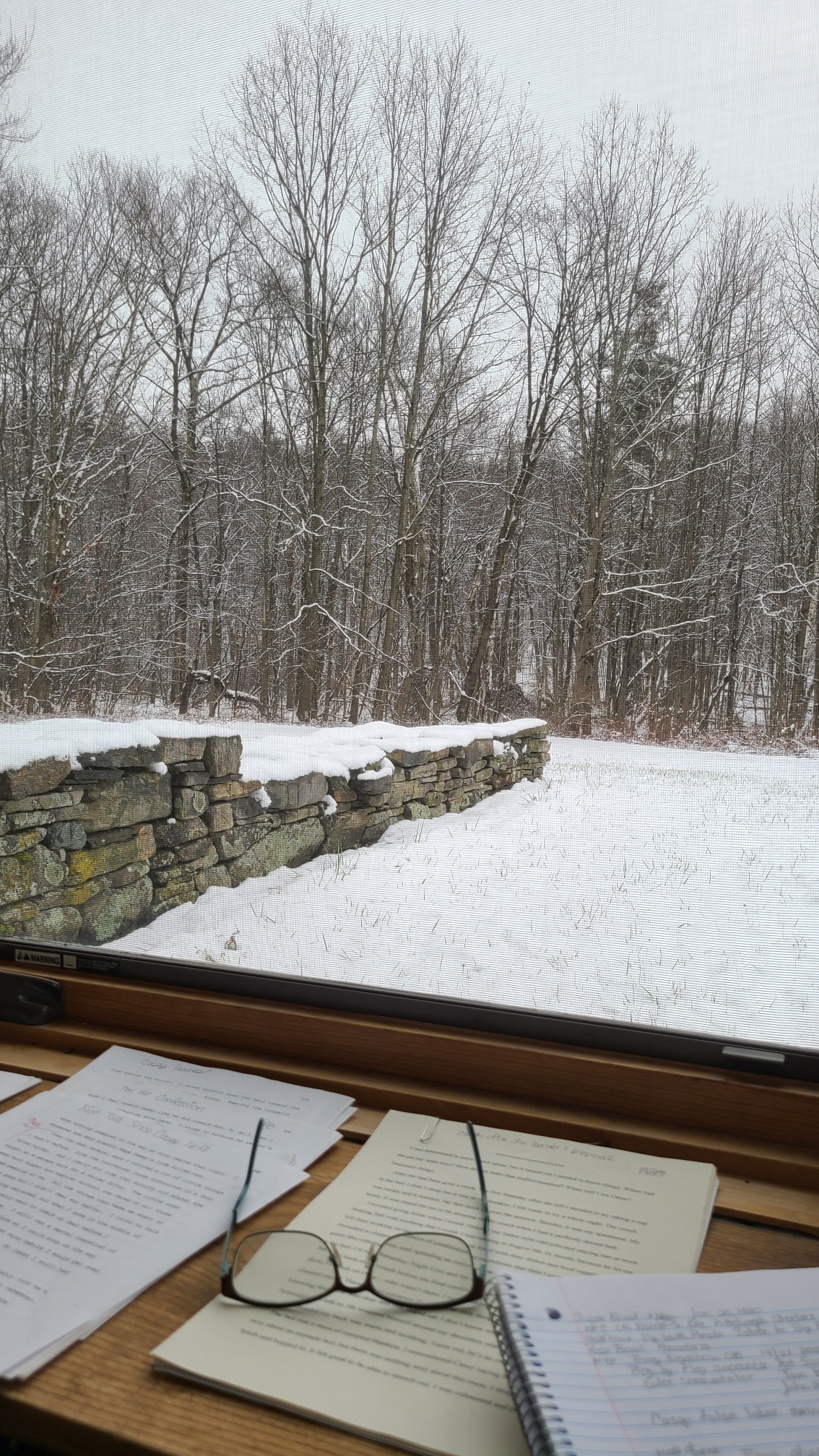
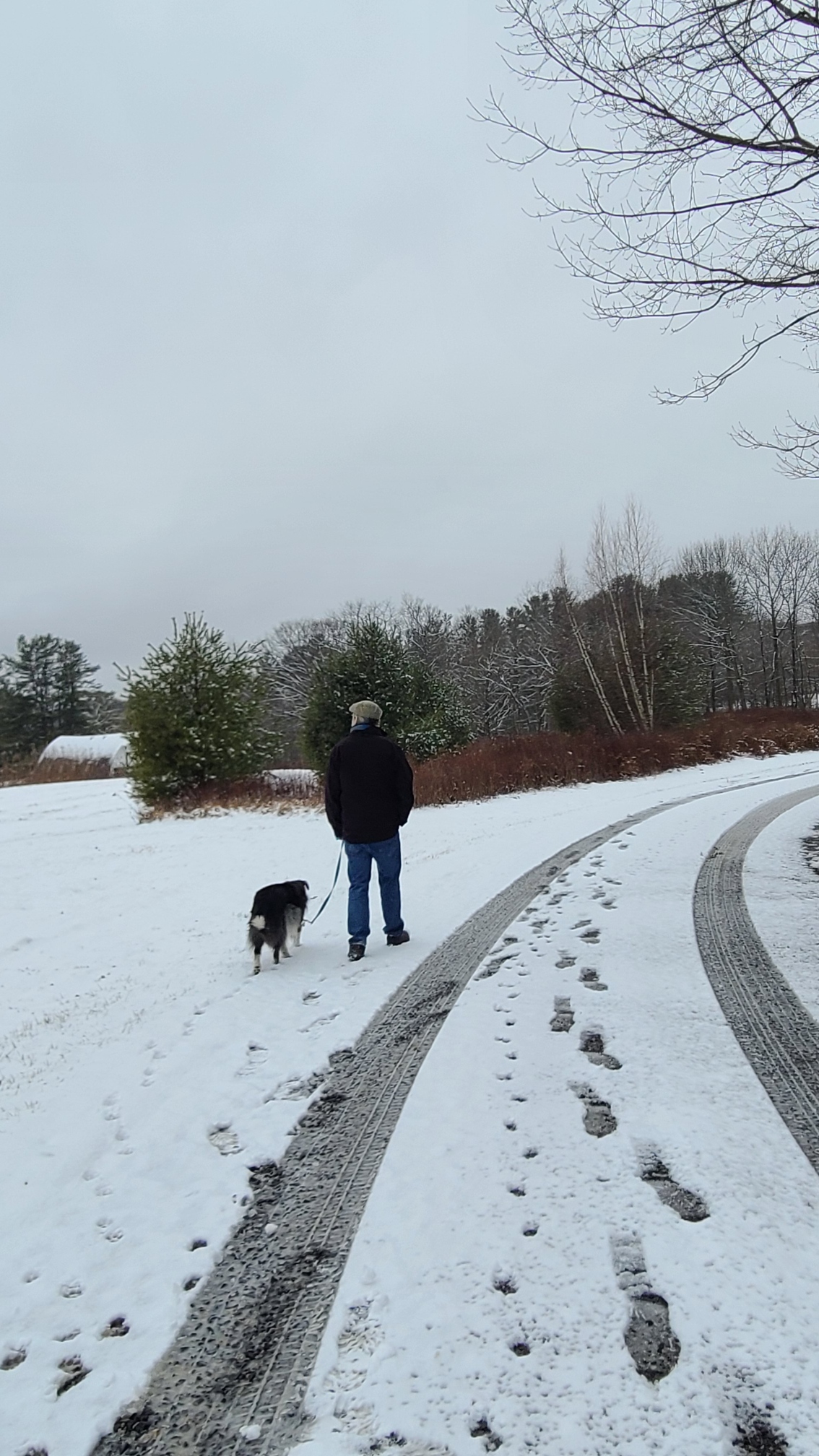

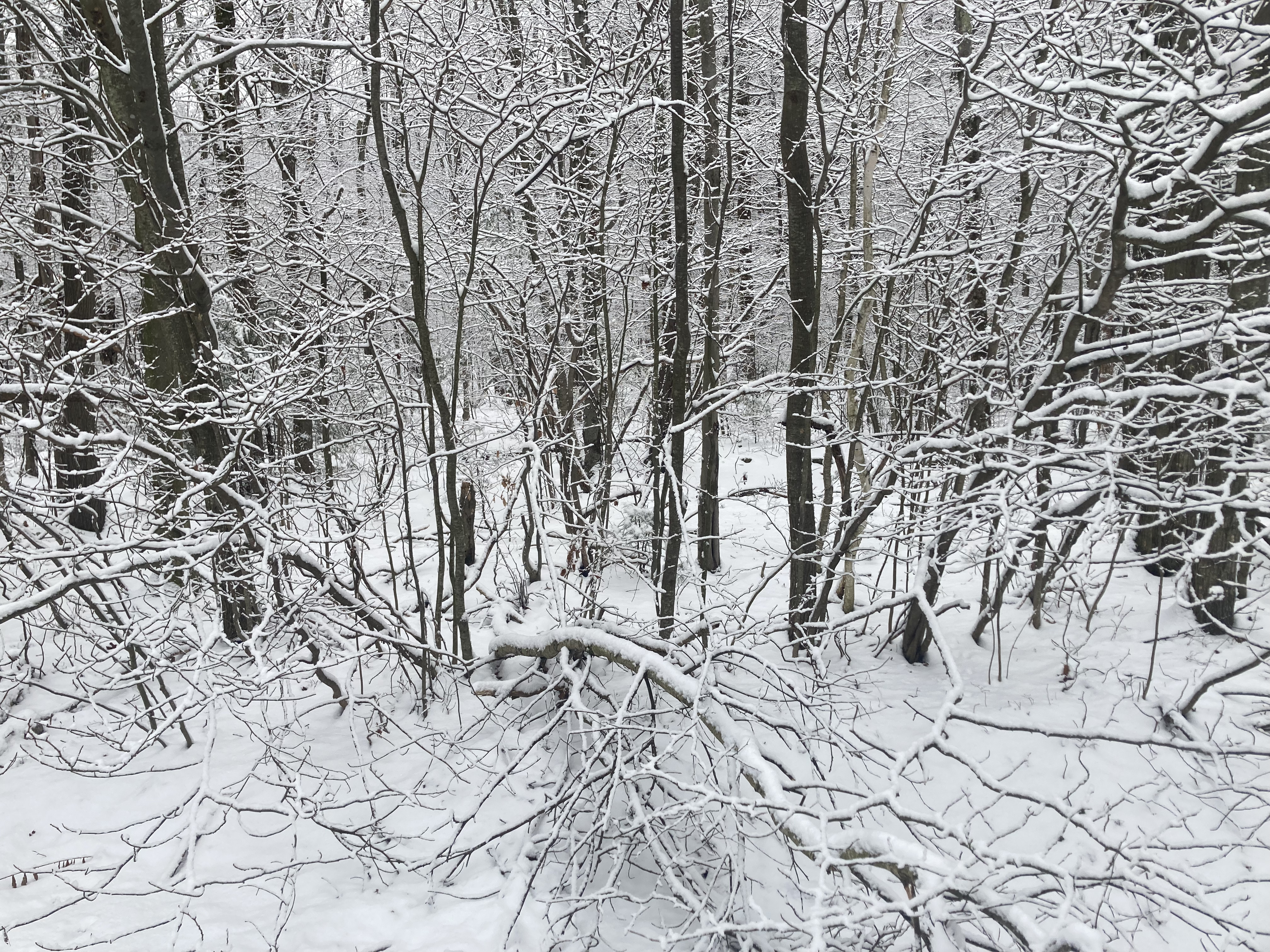
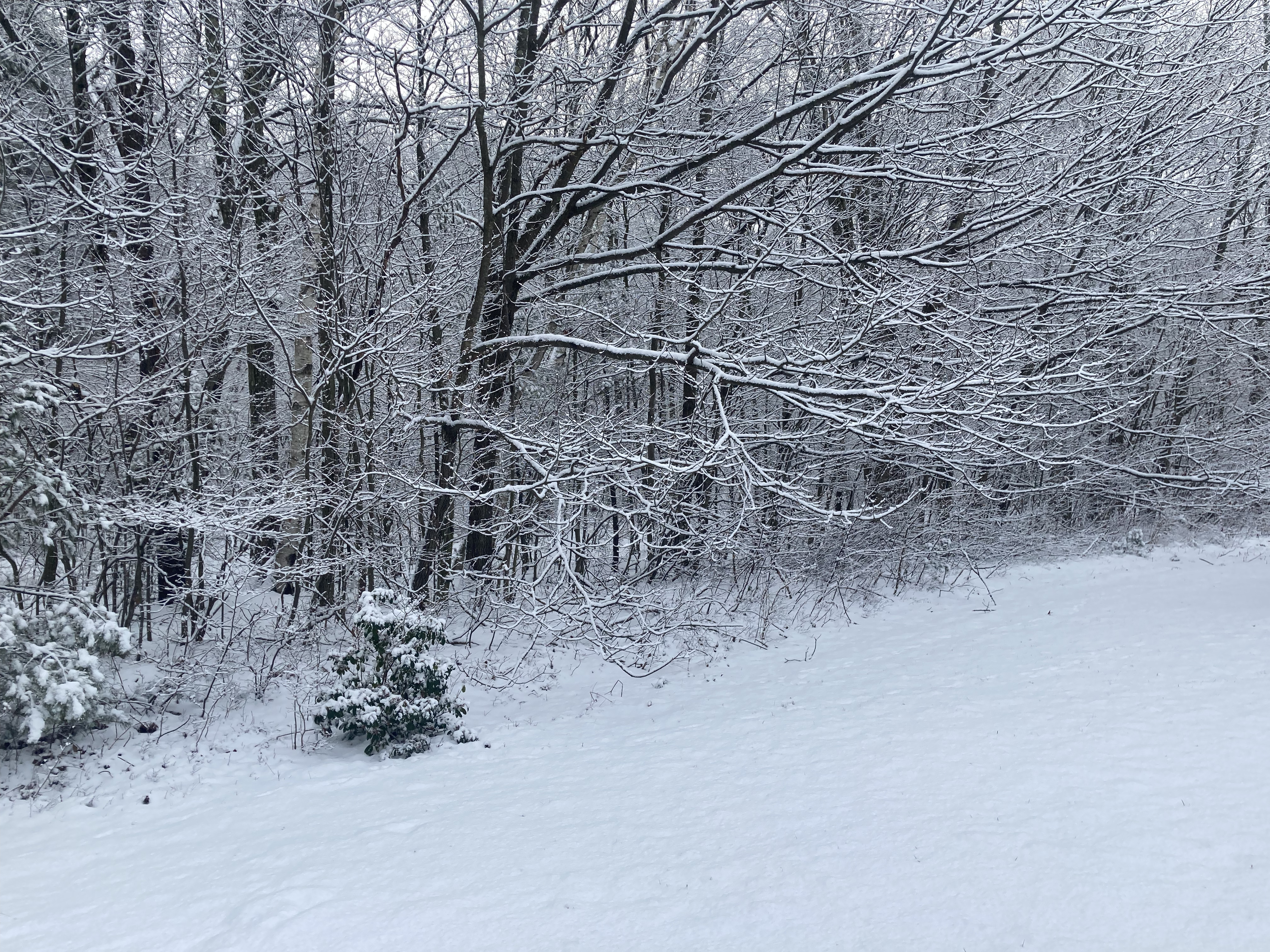

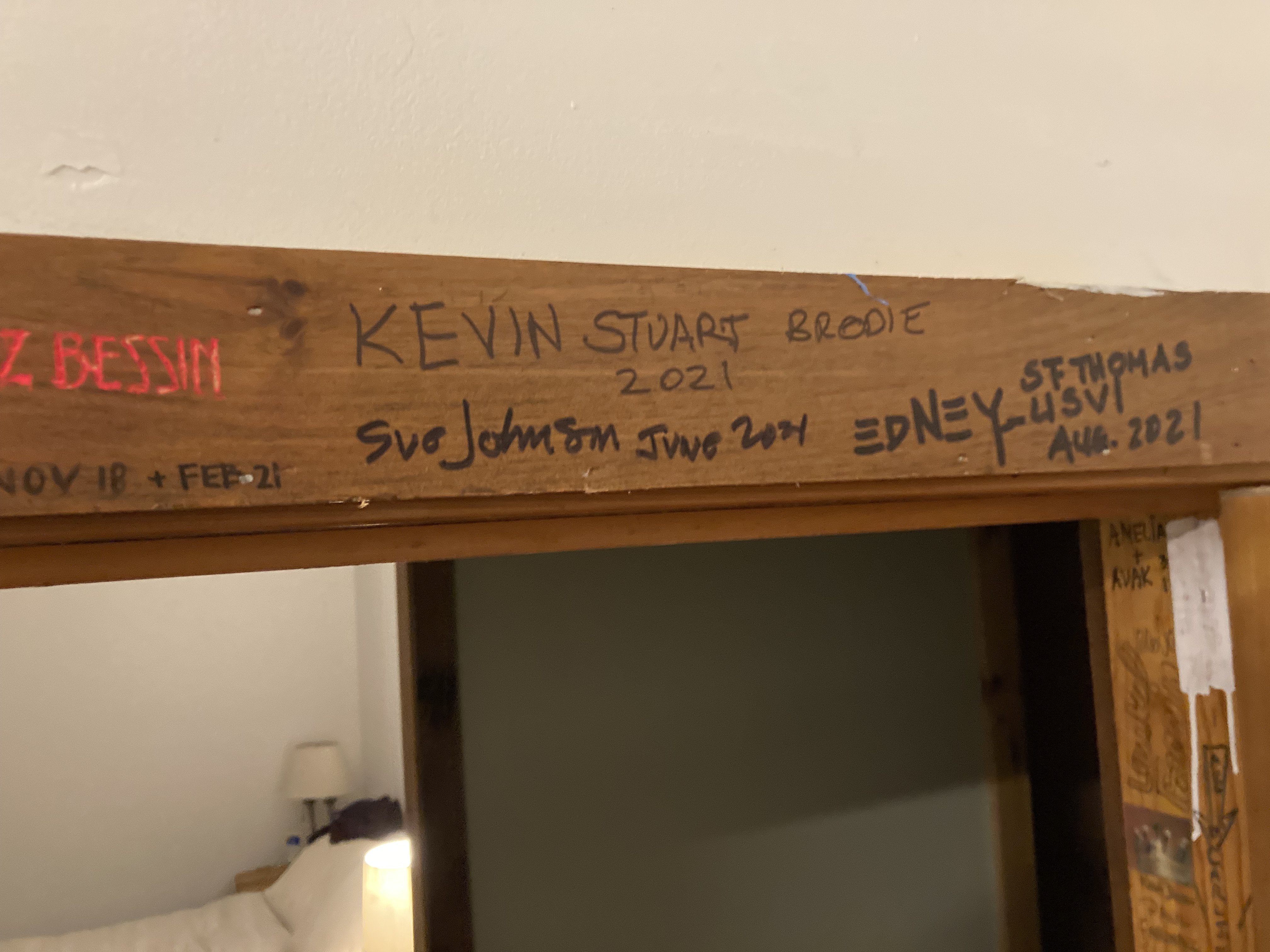
So there is our residency in photographs. I hope it give you a sense of what a magical week it was! I would return without hesitation.
How to Finish the Year
This past summer, Darlene and I applied for the Wintertide Residency at Millay Arts in Austerlitz, New York (near the Massachusetts line, just on the edge of the Berkshires). Millay Arts is located at Steepletop, the home of Pulitzer prize wining poet Edna St. Vincent Millay. The residency would be for the week between Christmas and New Years’ Eve, and we would each have our own studio in which to work. Happily, both of our applications were accepted, so we checked in here on Monday.

Darlene came with the intent to use her time to complete an extensive revision on her novel; I arrived to do research on the television series, as well as work on many of my own projects. Darlene set up in the writing studio, while I chose an artists’ studio. I have never written in an artists’ studio, but there was space and several tables upon which to spread out, and the floor was covered with the paint splotches. I relished being in a room that an aura of so much creativity. I did rewrites on two of my features, one on a television pilot, and another on a stage play. I did some work developing the story for a new feature–and got an idea for yet another, for which I free wrote an outline. And, of course, daily blog posts!
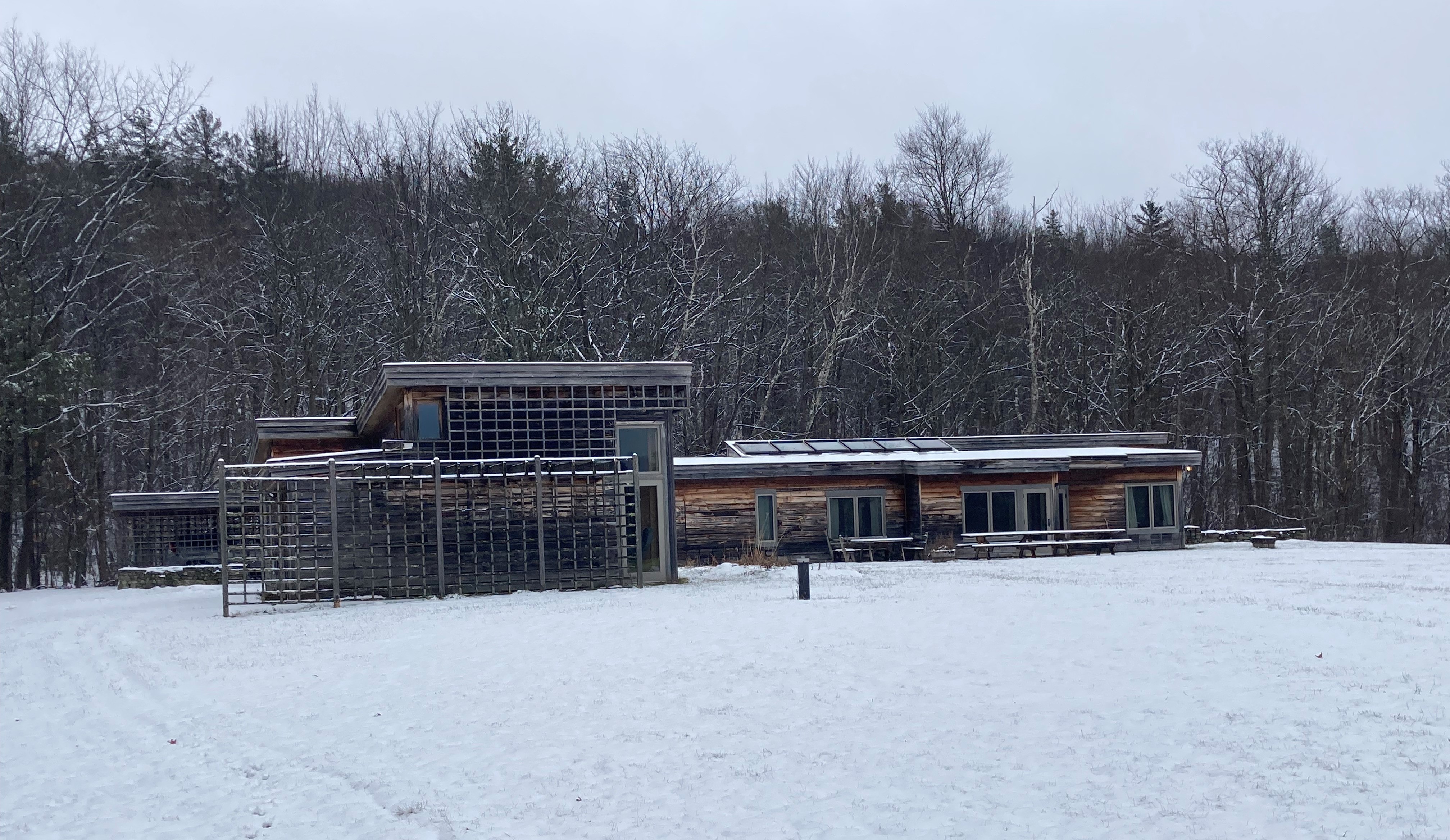
It turned out to be a superb residency for us both–we made significant progress on our work, enjoyed a daily walk to get out of our chairs, and as you can see the setting was beautiful. We also had the good fortune to share the space with Maine visual artist Jennifer Schmitt. Jennifer turned out to be both disgustingly talented and a lovely person.

As I write this, it is about ten in the morning on New Year’s Eve. We have to be out of here in about two hours, and while we have thoroughly enjoyed our time here, we are sad to see it end. Neither Darlene nor I are interested in leaving–we want to stay and write for as long as we can. Reality, however, has an annoying habit of beckoning. A beckon that cannot always be resisted.
2021 was challenging in so many ways. This was the perfect way to end it. Here’s hoping for a better 2022.
Critical Race Theory: Not Actually A Thing, Reprise
It was just five months ago I first wrote about this controversy. I am not fond of returning to topics in which I have made my views abundantly clear, but if these last few months have shown us anything it’s that this is not an issue that is disappearing anytime soon. It is futile to simply point out that Christopher Rufo and his cronies at the Manhattan Institute don’t know what Critical Race Theory actually is. As Rufo makes clear, he doesn’t care what it means. He just want to ensure that any culture war item he and other conservatives object to finds itself attached to it. In other words, his objection isn’t intellectual or even moral–it’s strategic.
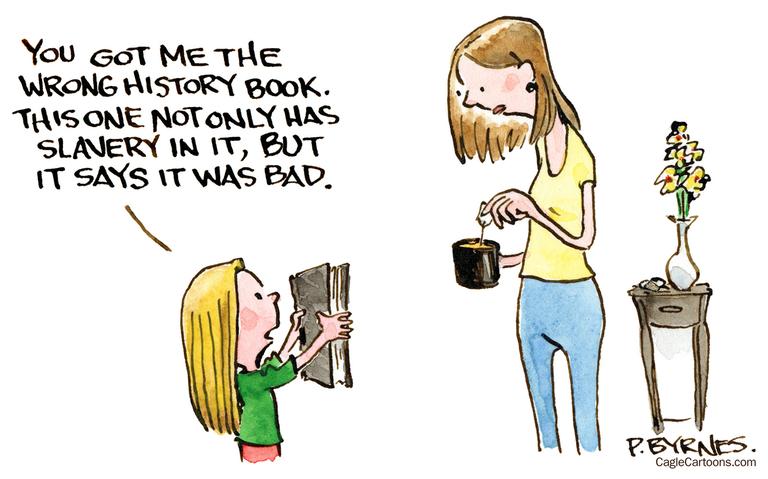
Certainly, public education as a battlefield for the culture war is not exactly a new concept–we are fast approaching the 100 year anniversary of the Scopes Trial. The rise of the Moral Majority in the 1980s with the likes of William Bennett and Edwin Meese and their dire prognostications of A Nation at Risk almost pass for quaint four decades on.
So this isn’t new. But why is it happening now?
There are few possible explanations for this. The mainstreaming of Black Lives Matter has no doubt frightened some who were quite happy to dismiss the organization as a violent, fringe group. It is much harder to dismiss them as such when the name of their movement appears on your Amazon.com log in page. Those that are quite content never having to confront the challenges of racism often don’t take kindly to an insistent voice that reminds them of their moral obligation to do otherwise. Railing against Critical Race Theory and the teaching of antiracism and cultural diversity is a way back home–if we get those things (whether real or imagined) out of the school, we can go back to not thinking about it.
This may account for some of the backlash. But I don’t think that’s all or even most of it. To really get at the heart of what’s happening, we need to travel back to pre-COVID America, which was really just two years ago.
In pre-COVID America, there was a group of people called education reformers, who were desperately trying to dismantle the public school system. They wanted to replace it with vouchers, or private schools, or for profit charter schools. To do so, they had to emphasize the need for high stakes testing ( to manufacture the data of failure), demonize teachers unions as organizations that protected the jobs of child molesters, insist that enthusiastic young college graduates with no job protections were ideal teachers, and even better: you could be protected from the potential sex offender teaching your kid algebra by a face on a computer screen. This was all for the endgame of turning education into a profitable venture for investors.
Moreover, this approach was working, so much so that mainstream Democrats like Rahm Emmanuel, Cory Booker and…Barack Obama became enthusiastic supporters of the reformers’ agenda long before Betsy DeVos became Secretary of Education. It was looking good for the reformers.
Then the pandemic hit, and suddenly no one could go to their local school. And something remarkable happened–parents suddenly realized how difficult a job it was to be a school teacher, and perhaps teachers were not overpaid, lazy leeches on the taxpayer. Many teachers worked hard to engaged their students in distance learning, showed up at students’ homes with a Chromebook and donated food, organized end-of-year car parades, and dropped off personal, individually printed graduation signs to seniors stuck at home. In short, teachers started to become popular, and taxpayers started to think of their schools as the community centers they were always intended to be.
And everyone realized that distance learning should not be the future of education because it sucks.
So what were the reformers to do? Their entire agenda had been debunked by a coronavirus. They had a choice–admit they got it wrong and support local schools, or reframe their objections in a way that would galvanize a different kind of outrage. Spoiler alert–they picked the latter.
So the problem with schools now is that they are indoctrinating students with anti-racism (why teaching only a Eurocentric version of history does not count as indoctrination is never explained), forcing students to surrender their constitutional freedoms to mask mandates (which are usually put in place by state governors, but it’s much easier to harass school boards because they tend to lack armed bodyguards), and offering recognition of transgender students (which overall bothers parents way more than students). In other words, a channel for outrage and apprehension at a moment when large swaths of our population are overwhelmed with anxiety and feel an alarming lack of control.
You have to hand it to the reformers. They do know how to read the room. If only they would put their energy into actual problems with public education (poor funding, lack of qualified administrators, too much high stakes testing) they might become part of the solution, instead of generating most of the problems.
But that approach won’t make any profits for investors.
Greetings from the US Army
Don’t worry, I haven’t enlisted. The title is the opening sentence of an email I received in August from someone named Amy Kosby, who has the rather lengthy title of Program Analyst, G9, Copyrights and Royalties, Leisure Travel, Arts and Crafts, Installation Management Command. In short, it’s her job to locate and obtain entertainment for active U.S. Army members.
The rest of her message continued: “I am the Music/Theatre program manager for the U.S. Army and I have a theater in Kaiserslautern Germany that is interested in performing ARCHETYPES IN REHAB.” Archetypes in Rehab was performed at the 2017 Play in a Day Festival at the Playhouse on Park Theatre in West Hartford, Connecticut. It was a play I had written overnight sitting in theatre in which it would be performed the very next night. Four years later (almost to the day), I was receiving a request to have the play performed again. By the United States Army. For troops stationed in Germany. And I would be paid royalties.
I have had some surreal things happen to me, but this one was hard to beat. I immediately began to suspect that it was some sort of scam…but to what end? They were not asking for my social security number, or any other sensitive information. It was also very elaborate–if it was a scam, someone decided to make up Amy Kosby, a story about staging my play in Germany, and each communication written with the various bureaucratic flourishes of unclassified military communication. It was a long way for a scammer to go for not much payoff.

It also appeared that my play was discovered on the New Play Exchange, which exists as a place for producers to locate plays for possible production. In other words, Ms. Kosby found Archetypes in Rehab in a place that was designed specifically for that purpose. With suspicions largely corralled by my sense of reason, I gave permission for the performance. Ms. Kosby then requested an invoice for royalties, and she would be certain to send a check when the performance was completed.
I immediately contacted members of my playwright network, unsure of what a playwright with few credits in front of a nonpaying military audience should charge for royalties. With their advice on board, I submitted an invoice to the United States Army. There were, indeed, a lot firsts for me in this transaction.
Ms. Kosby thanked me for the invoice, and let me know that the four performances would be September 17-18 and 24-25. I would have loved to have hopped on a plane to Germany to see the performance–I imagine it wouldn’t have been too difficult to arrange a pass, and it was hardly likely the play would be performed in the most secure wings of the base. However, it just wasn’t practical or financially viable. So I was left to hope for the best.
I still have no idea how the performances went, or how the audience reacted. I do know that my very first royalty check as a playwright arrived in the mail around the first of October.
Plenty of Distance, Not Much Learning
Those of us who are professional educators probably want to shoot the next administrator who starts a conversation and/or email that begins with the phrase “In these unprecedented times…” Not only is it an unnecessary modifier (does it actually deepen our understanding of what follows?), it is intolerably cliché. It reminds me of a line from the television show Doc Martin:
“If it goes without saying, why are you saying it?”
Of course, what ostensibly makes these times “unprecedented” is the global Coronavirus pandemic. Historians, however, might take exception to that statement. There have been many pandemics in history (Live Science lists the twenty worst here) so it seems facile to describe this pandemic, as awful as it is, as unprecedented. However, one thing that is unequivocally without precedent is the affect that COVID-19 has had upon educational instructions. When the Spanish Flu (which originated in Kansas) hit a century ago, approximately 60% of children attended schools. Today, that percentage is approximately 96. So the Kansas Spanish Flu affected schools had to figure out how to continue to educate a significantly smaller percentage of the population than today. Of course, their response was just to keep kids in school, as many of the urban schools at the time offered better hygiene than could be found in tenements and crowded neighborhoods. Today, the decision was made to keep students at home and continue to educate them remotely via their internet connection.
Even though it’s been seventeen months since the pandemic shut down schools last spring, I have not chimed in about the phenomenon of distance/remote learning. The reason is I wanted to spend some time experiencing the different forms, study the research and put careful thought into deciding how I felt about it. My knee-jerk reaction is that it was going to be terrible, but I felt teachers had an obligation to make it work as well as we possibly could. So, I chose to keep an open mind and see if reality and research affirmed or refuted my initial reaction. And after a year and a half of experience, discussions with colleagues and students, and a dive into the research, what is my conclusion?
It is terrible.

First of all, there are a variety of distance learning models that school districts have imposed: one is full distance learning, where every student is at home and the teacher instructs via computer. There is hybrid, wherein half the class is at home and the other half in school for part of the week, then switch places for the rest of the week. Then there is the live stream model wherein some students are in school every day of the week, and others are home every day. Since last March, I have taught using all of these models. While the live stream model is far and away the best approach, it is by no means an ideal way to teach.
Do not get me wrong: I am aware there are students who do well with this model, because they are independent and self motivated. They, however, also do well when they attend in person class, so it’s hard to make the case that remote learning is somehow preferable for those students. I also had three students do well enough to pass my class last year once they were at home, as they were no longer distracted by their social groups and no longer incentivized to blow off their work because it was “cool” to fail classes. I firmly believe that these students would not have passed my class had they continued their in person learning.
Having said that, the number of students who did not succeed dwarfed the number that did. It’s not difficult to see why. For many young people, the ability to focus on academics is challenging enough in an school environment that is conducive to academic focus. Take that away, and then leave students in a place where they are surrounded by all of the things that compete even more heavily for their attention. You don’t need to be on staff at Columbia Teachers College to ascertain what is going to happen next (or what is not going to happen).
That doesn’t take into consideration the students with learning disabilities and/or are neurologically atypical. Many need the structure and the tactile instruction essential for them to learn. Many cannot learn at home without parental support, and if parents are working, there is none to be had. Many students also don’t’ possess a device or quality Wi-Fi in their homes, which makes it very difficult to attend class regularly. Over the next several years, you can expect a significant number of civil rights lawsuits for students with disabilities who did not succeed distance learning.
There is also the social aspect. Whilst anyone who teaches is aware the texted that students engage in what appears to be largely unnecessary drama, and are not always kind to each other, most of them need the social interaction that school provides. As you have no doubt experienced yourself, spending a day at a computer screen interacting with others is paradoxically isolating. Our brains really require the physical presence of others to feel any meaningful connection. For young people who are still developing emotional intelligence (and still lack fully formed frontal lobes), the dearth of social interaction could end up having the most acute long term affects on the students.
There’s also the physical aspect. It is simply not healthy to sit and stare at a computer screen for hours upon end. Aside from the somatic stress on your body from sitting, absorbing the persistent screen radiation is draining for both students and teachers. Yes, we sit a lot at school and use our computers, but there are other types of classes (art, music, physical education) that can offer relief from sitting and staring at a screen. Even walking the hallway or the stairs to the next class is good for you. All of those benefits vanish during distance learning.
As my friend and colleague Nick Ferroni points out, teaching is a vocation built upon relationships. We succeed largely based upon how well we can nurture those relationships. It encourages students to trust us, to cooperate and put in their best efforts, and allows us to immediately intervene when students are not putting in their best efforts or are struggling emotionally. It is very difficult–if not impossible–to form those types of relationships with someone on a computer screen. As Nick puts it, remote learning takes away the best tool we have to be effective.
The research is bearing all of this out. Students are not as successful, they don’t enjoy distance learning, and they are finding that it is adding unnecessary stress to their lives at a time when life is stressful enough, thanks very much. Of course , the problem is scalable: while it is preferable to have some or even most students in the classroom, the percentage that are struggling with distance learning remains static. Of course, while many school districts have said they will return to full time in class learning this fall, we know what could all change depending on vaccination rates and the vigor of the Delta Variant.
Thus, distance learning isn’t going anywhere anytime soon. However, let’s not kid ourselves into thinking that it is an effective model. While it may be necessary to once again resort to it. it will at best be a necessary evil.
Critical Race Theory: Not Actually a Thing
Just to be clear, I don’t mean to suggest that Critical Race Theory doesn’t exist. It clearly does, mostly as an elective in law schools. My title instead refers to the paranoid accusations voiced by mostly conservative politicians claiming that Critical Race Theory is a common topic taught in public elementary, middle and high schools throughout the country. These accusations have prompted angry denunciations, the establishment of “patriotic” commissions, and laws outlawing the practice.
Here’s the problem: no public primary or secondary school teaches Critical Race Theory in any history or social studies class. Not one.
This phenomenon is vaguely reminiscent of the laws passed a few years ago ensuring that “Sharia Law” is banned in various states, counties and municipalities (presumably unaware that something called “the First Amendment to the Constitution of the United States” already outlaws that). It would be easy to dismiss it all as political posturing. The easiest political thing to do is ban something that doesn’t exist. In a few years, when everyone finally realizes it doesn’t exist, you can take political credit for getting rid of it.
It goes much deeper than that, however. There is clearly something at play here that is far more insidious. Most politicians who are opposed to Critical Race Theory couldn’t tell you what it actually is, but their actions are telling us what they really want: ban teaching about racism.
I, for one, have taught about racism for years. It is very difficult to teach history and avoid it (although your average high school textbook does an impressive job). It is hard to teach about the establishment of European colonies or Westward Expansion without teaching about racism. One cannot truly learn about the American Revolution outside of the context of racism–look at the final complaint against King George from the Declaration of Independence. There’s a reason historian Gary Nash called the Revolution “The largest slave uprising in American history.” Moreover, it is difficult to teach about the great economic expansion of the United States without teaching about racism. And it is close to impossible to teach the Civil War without teaching about racism.
I will also confess to teaching about racism in an unbalanced way: I teach that racism is bad, and I don’t feel compelled to teach the other side of that argument. Certain controversies in history lend themselves well to differences of opinion–the dropping of the atomic bomb on Japan, for instance. Other topics do not need to be treated in such a way. When I teach the Holocaust, I don’t balance my teaching with the views of Holocaust deniers. Similarly, I feel no need to balance my teaching that racism is bad with the perspective that racism is good.
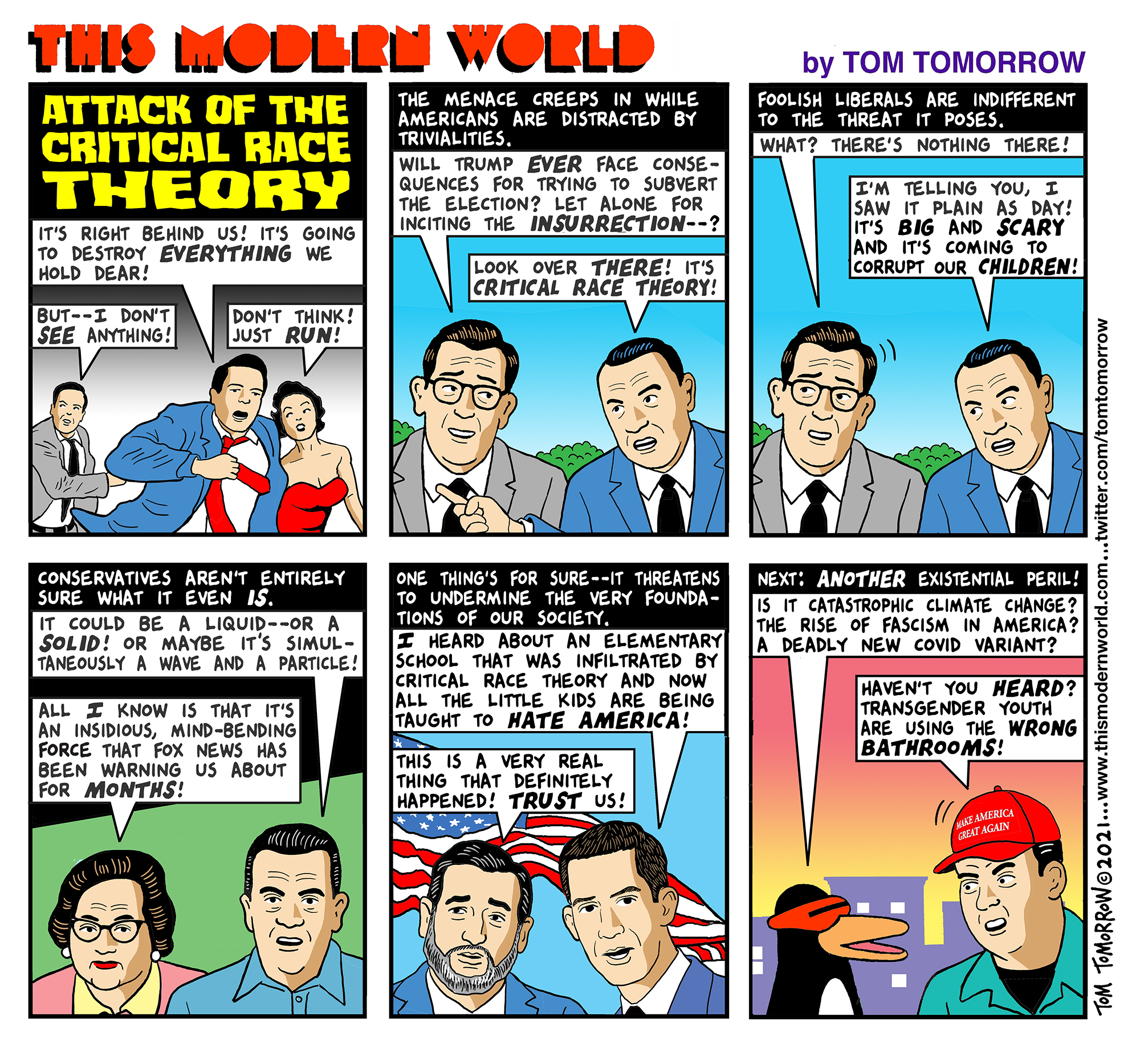
So why is there so much hostility to teaching about racism? We hear a great deal of spurious arguments, none of which are particularly convincing. Teaching about racism divides us (no, that’s actual racism). Teaching about racism is racist because it claims all white people are racist (no one is teaching all white people are racist–we don’t get our curriculum from Lewis Farrakhan) . Learning about racism leads young people to hate their country (I presume they mean to question authority. This of course has nothing to do with teaching racism. This is called “being a teenager.”) Learning about racism is history is “lying.” No, teaching that racism wasn’t a factor in history, the Civil War was about states’ rights, and erecting “patriotic” statues to honor people who started a war to maintain white supremacy is lying about history.
Since none of these arguments are in any way coherent, it raises the question about what is really happening here. If there is one thing the last twelve or so months have forced us to confront is something that should have become obvious thirty years ago when we first learned the name Rodney King: there is something called institutional racism, and it’s a problem. It’s the reason black people are significantly more likely to be killed by police officers than whites. It’s the reason that black people are significantly less likely than whites to have their medical complaints taken seriously. It’s the reason black families are charged more for life, health, and home insurance than whites. If you live in an urban area with a mostly black neighborhood, you may have noticed it’s separated from the rest of the city by a multilane interstate. That’s not an accident.
Of course, confronting this injustice in our society would require us to carefully examine, analyze, and dialogue about the extent that racism is built into our societal institutions, facing the history of how it became baked in to those institutions, developing an understanding of how these same institutions have reinforced white privilege, and using this discussion to develop strategies for reform. This is really hard, but fortunately, there is a notion that can help us approach such an endeavor: it’s called Critical Race Theory.
It is a tremendous irony that actual Critical Race Theory is a tool we could use to confront systemic racism, but many in our society would much prefer to create a Dwayne Johnson-sized Straw Man and attack that instead. It makes it easy to avoid the hard work needed to address racism in this country. People (and let’s face it–mostly white people) can go on pretending that Martin Luther King ended racism, and now there’s Barack and Oprah, so we’re good! Of course, one of the problems with this historical narrative is that it is largely inaccurate. You know what would solve that?
The actual teaching of history.
Zooming “Invincible Summer”
Let’s face it: Zoom is not the ideal way to experience theatre. It is arguably not the ideal way to experience any form of communication, but this is now the world in which we live. Thus, it was not without some level of trepidation that I approached my first virtual play reading.
Don’t get me wrong: I was honored and excited to receive a call from theatre director/producer Dana Sachs. Dana said he had read my play, really liked it, and wanted to stage a reading using the actors from the Caravan Theatre Company of Cheshire, Connecticut to stage a reading on Zoom. He said he already had the actors in mind for the cast, and just needed my go ahead. The play had not been read by actors for nearly five years, and this was the first time there had been any activity about the play since my agent passed away last year from Covid-19. I enthusiastically said yes.
This was a far different experience than the last time a reading was staged for “Invincible Summer.” Previously I worked closely with the producer, was involved in the selection of the director and actors, and reserving the theater space. I also paid for the reading. Once Dana had my go ahead, he handled the casting, the technological arrangements, and the publicity. It was odd not to be involved, but also liberating to trust a professional to handle all of the details.
My trust was well-founded. Dana assembled an excellent cast: Mark Gilchrist, Christie Maturo, Olena Hodges, Allan Church, Frank Dicaro, Vickie Blake, Jack B. Levine, and Elizabeth Harnett. I was anxious about how actors would interact in such a format, not being in the same room, and never appearing on screen together. I needn’t have worried–the cast and director worked hard to ensure the play flowed and moved as seamlessly as possible. I was also impressed with how hard the cast worked on the details: getting into costume, collecting props, selecting backdrops from their screens that were germane to the setting and the characters. Each cast member dug deep to find the emotional core of each character, and revealed nuances I didn’t realize they had. It also revealed to me some areas of improvement that I needed to address in the play. In short, it was exactly what I had hoped for.
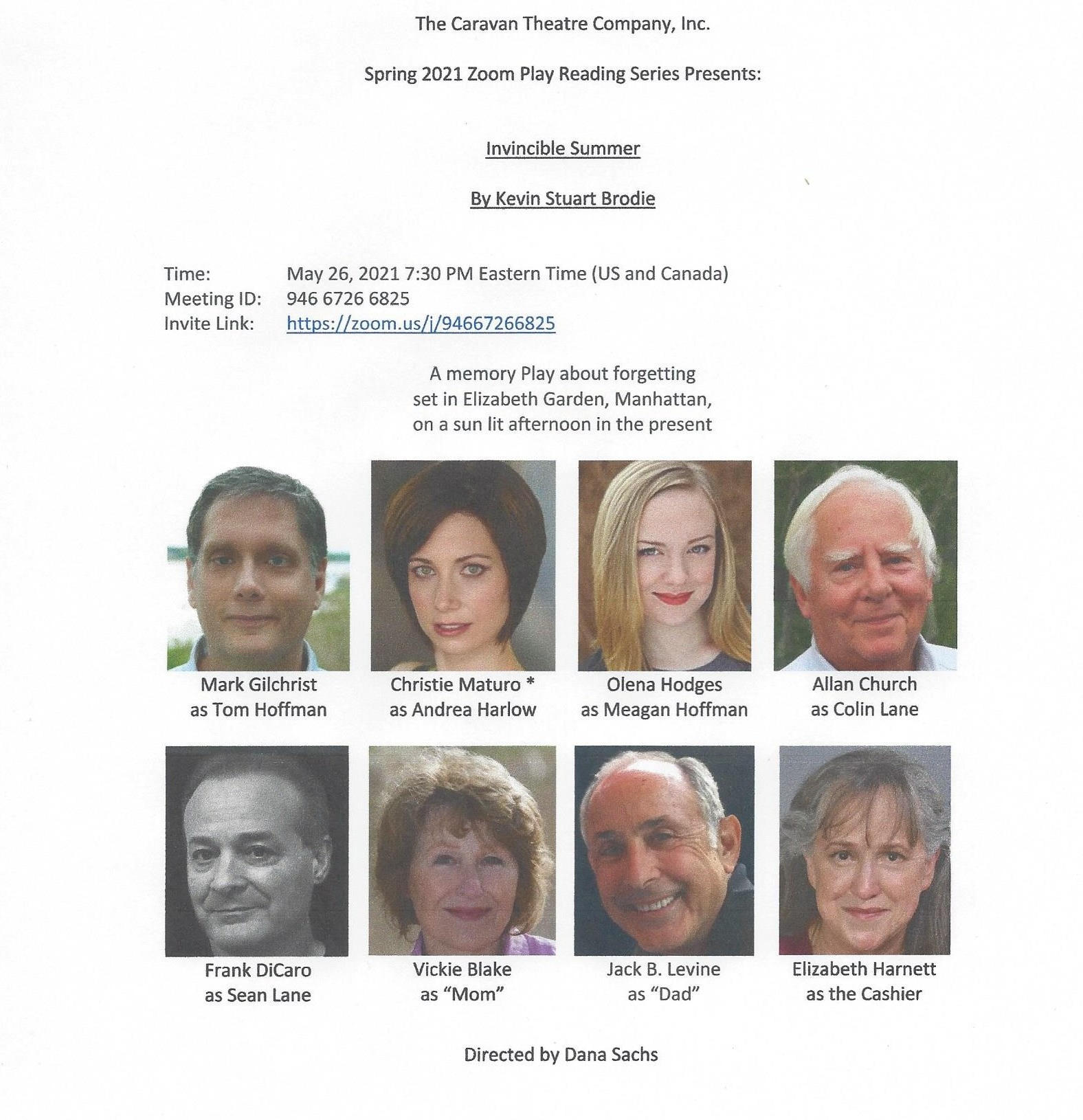
After the reading, Dana received an email from a friend of his who watched the reading. She had this to say:
“I cannot remember if I told you, but [my husband] died in September 2020 after a rapidly and eventually very debilitating case of Parkinson’s. So the show had special meaning for me. I felt compassionately seen and deeply understood by the author. I think that [my husband] would have felt the same, had he been alive to see it. The show had me in tears, in a good way. It was a relief I certainly didn’t expect, but which I greatly appreciated.All my best wishes to the author. If this show is any evidence, he is a very impressive, deeply compassionate, and insightful person. And I thought the performances were just magnificent. They rang so true and honest. Of course, I know they had a wise, highly competent, and very intelligent director. You did a great job!This play and this production are a gift to all, but especially to those of who have either been directly affected by this terrible disease, or watched someone close go through it. Again, I cannot thank you and everyone else enough for all your efforts, and for sharing such a deeply moving work of art.”
As a writer, I don’t believe I have ever received a higher compliment.
There is more ahead for “Invincible Summer,” including another reading in August, and hopefully its stage debut in Brooklyn this fall.
In the meantime, if you’d like to watch a recording of the Zoom reading, it is attached below:
https://drive.google.com/file/d/1DFEURBqbdoIKUJjmJ87DaSTGW7cBHgui/view?usp=sharing
 Danger Is My Business