Greetings from the US Army
Don’t worry, I haven’t enlisted. The title is the opening sentence of an email I received in August from someone named Amy Kosby, who has the rather lengthy title of Program Analyst, G9, Copyrights and Royalties, Leisure Travel, Arts and Crafts, Installation Management Command. In short, it’s her job to locate and obtain entertainment for active U.S. Army members.
The rest of her message continued: “I am the Music/Theatre program manager for the U.S. Army and I have a theater in Kaiserslautern Germany that is interested in performing ARCHETYPES IN REHAB.” Archetypes in Rehab was performed at the 2017 Play in a Day Festival at the Playhouse on Park Theatre in West Hartford, Connecticut. It was a play I had written overnight sitting in theatre in which it would be performed the very next night. Four years later (almost to the day), I was receiving a request to have the play performed again. By the United States Army. For troops stationed in Germany. And I would be paid royalties.
I have had some surreal things happen to me, but this one was hard to beat. I immediately began to suspect that it was some sort of scam…but to what end? They were not asking for my social security number, or any other sensitive information. It was also very elaborate–if it was a scam, someone decided to make up Amy Kosby, a story about staging my play in Germany, and each communication written with the various bureaucratic flourishes of unclassified military communication. It was a long way for a scammer to go for not much payoff.

It also appeared that my play was discovered on the New Play Exchange, which exists as a place for producers to locate plays for possible production. In other words, Ms. Kosby found Archetypes in Rehab in a place that was designed specifically for that purpose. With suspicions largely corralled by my sense of reason, I gave permission for the performance. Ms. Kosby then requested an invoice for royalties, and she would be certain to send a check when the performance was completed.
I immediately contacted members of my playwright network, unsure of what a playwright with few credits in front of a nonpaying military audience should charge for royalties. With their advice on board, I submitted an invoice to the United States Army. There were, indeed, a lot firsts for me in this transaction.
Ms. Kosby thanked me for the invoice, and let me know that the four performances would be September 17-18 and 24-25. I would have loved to have hopped on a plane to Germany to see the performance–I imagine it wouldn’t have been too difficult to arrange a pass, and it was hardly likely the play would be performed in the most secure wings of the base. However, it just wasn’t practical or financially viable. So I was left to hope for the best.
I still have no idea how the performances went, or how the audience reacted. I do know that my very first royalty check as a playwright arrived in the mail around the first of October.
Plenty of Distance, Not Much Learning
Those of us who are professional educators probably want to shoot the next administrator who starts a conversation and/or email that begins with the phrase “In these unprecedented times…” Not only is it an unnecessary modifier (does it actually deepen our understanding of what follows?), it is intolerably cliché. It reminds me of a line from the television show Doc Martin:
“If it goes without saying, why are you saying it?”
Of course, what ostensibly makes these times “unprecedented” is the global Coronavirus pandemic. Historians, however, might take exception to that statement. There have been many pandemics in history (Live Science lists the twenty worst here) so it seems facile to describe this pandemic, as awful as it is, as unprecedented. However, one thing that is unequivocally without precedent is the affect that COVID-19 has had upon educational instructions. When the Spanish Flu (which originated in Kansas) hit a century ago, approximately 60% of children attended schools. Today, that percentage is approximately 96. So the Kansas Spanish Flu affected schools had to figure out how to continue to educate a significantly smaller percentage of the population than today. Of course, their response was just to keep kids in school, as many of the urban schools at the time offered better hygiene than could be found in tenements and crowded neighborhoods. Today, the decision was made to keep students at home and continue to educate them remotely via their internet connection.
Even though it’s been seventeen months since the pandemic shut down schools last spring, I have not chimed in about the phenomenon of distance/remote learning. The reason is I wanted to spend some time experiencing the different forms, study the research and put careful thought into deciding how I felt about it. My knee-jerk reaction is that it was going to be terrible, but I felt teachers had an obligation to make it work as well as we possibly could. So, I chose to keep an open mind and see if reality and research affirmed or refuted my initial reaction. And after a year and a half of experience, discussions with colleagues and students, and a dive into the research, what is my conclusion?
It is terrible.

First of all, there are a variety of distance learning models that school districts have imposed: one is full distance learning, where every student is at home and the teacher instructs via computer. There is hybrid, wherein half the class is at home and the other half in school for part of the week, then switch places for the rest of the week. Then there is the live stream model wherein some students are in school every day of the week, and others are home every day. Since last March, I have taught using all of these models. While the live stream model is far and away the best approach, it is by no means an ideal way to teach.
Do not get me wrong: I am aware there are students who do well with this model, because they are independent and self motivated. They, however, also do well when they attend in person class, so it’s hard to make the case that remote learning is somehow preferable for those students. I also had three students do well enough to pass my class last year once they were at home, as they were no longer distracted by their social groups and no longer incentivized to blow off their work because it was “cool” to fail classes. I firmly believe that these students would not have passed my class had they continued their in person learning.
Having said that, the number of students who did not succeed dwarfed the number that did. It’s not difficult to see why. For many young people, the ability to focus on academics is challenging enough in an school environment that is conducive to academic focus. Take that away, and then leave students in a place where they are surrounded by all of the things that compete even more heavily for their attention. You don’t need to be on staff at Columbia Teachers College to ascertain what is going to happen next (or what is not going to happen).
That doesn’t take into consideration the students with learning disabilities and/or are neurologically atypical. Many need the structure and the tactile instruction essential for them to learn. Many cannot learn at home without parental support, and if parents are working, there is none to be had. Many students also don’t’ possess a device or quality Wi-Fi in their homes, which makes it very difficult to attend class regularly. Over the next several years, you can expect a significant number of civil rights lawsuits for students with disabilities who did not succeed distance learning.
There is also the social aspect. Whilst anyone who teaches is aware the texted that students engage in what appears to be largely unnecessary drama, and are not always kind to each other, most of them need the social interaction that school provides. As you have no doubt experienced yourself, spending a day at a computer screen interacting with others is paradoxically isolating. Our brains really require the physical presence of others to feel any meaningful connection. For young people who are still developing emotional intelligence (and still lack fully formed frontal lobes), the dearth of social interaction could end up having the most acute long term affects on the students.
There’s also the physical aspect. It is simply not healthy to sit and stare at a computer screen for hours upon end. Aside from the somatic stress on your body from sitting, absorbing the persistent screen radiation is draining for both students and teachers. Yes, we sit a lot at school and use our computers, but there are other types of classes (art, music, physical education) that can offer relief from sitting and staring at a screen. Even walking the hallway or the stairs to the next class is good for you. All of those benefits vanish during distance learning.
As my friend and colleague Nick Ferroni points out, teaching is a vocation built upon relationships. We succeed largely based upon how well we can nurture those relationships. It encourages students to trust us, to cooperate and put in their best efforts, and allows us to immediately intervene when students are not putting in their best efforts or are struggling emotionally. It is very difficult–if not impossible–to form those types of relationships with someone on a computer screen. As Nick puts it, remote learning takes away the best tool we have to be effective.
The research is bearing all of this out. Students are not as successful, they don’t enjoy distance learning, and they are finding that it is adding unnecessary stress to their lives at a time when life is stressful enough, thanks very much. Of course , the problem is scalable: while it is preferable to have some or even most students in the classroom, the percentage that are struggling with distance learning remains static. Of course, while many school districts have said they will return to full time in class learning this fall, we know what could all change depending on vaccination rates and the vigor of the Delta Variant.
Thus, distance learning isn’t going anywhere anytime soon. However, let’s not kid ourselves into thinking that it is an effective model. While it may be necessary to once again resort to it. it will at best be a necessary evil.
Critical Race Theory: Not Actually a Thing
Just to be clear, I don’t mean to suggest that Critical Race Theory doesn’t exist. It clearly does, mostly as an elective in law schools. My title instead refers to the paranoid accusations voiced by mostly conservative politicians claiming that Critical Race Theory is a common topic taught in public elementary, middle and high schools throughout the country. These accusations have prompted angry denunciations, the establishment of “patriotic” commissions, and laws outlawing the practice.
Here’s the problem: no public primary or secondary school teaches Critical Race Theory in any history or social studies class. Not one.
This phenomenon is vaguely reminiscent of the laws passed a few years ago ensuring that “Sharia Law” is banned in various states, counties and municipalities (presumably unaware that something called “the First Amendment to the Constitution of the United States” already outlaws that). It would be easy to dismiss it all as political posturing. The easiest political thing to do is ban something that doesn’t exist. In a few years, when everyone finally realizes it doesn’t exist, you can take political credit for getting rid of it.
It goes much deeper than that, however. There is clearly something at play here that is far more insidious. Most politicians who are opposed to Critical Race Theory couldn’t tell you what it actually is, but their actions are telling us what they really want: ban teaching about racism.
I, for one, have taught about racism for years. It is very difficult to teach history and avoid it (although your average high school textbook does an impressive job). It is hard to teach about the establishment of European colonies or Westward Expansion without teaching about racism. One cannot truly learn about the American Revolution outside of the context of racism–look at the final complaint against King George from the Declaration of Independence. There’s a reason historian Gary Nash called the Revolution “The largest slave uprising in American history.” Moreover, it is difficult to teach about the great economic expansion of the United States without teaching about racism. And it is close to impossible to teach the Civil War without teaching about racism.
I will also confess to teaching about racism in an unbalanced way: I teach that racism is bad, and I don’t feel compelled to teach the other side of that argument. Certain controversies in history lend themselves well to differences of opinion–the dropping of the atomic bomb on Japan, for instance. Other topics do not need to be treated in such a way. When I teach the Holocaust, I don’t balance my teaching with the views of Holocaust deniers. Similarly, I feel no need to balance my teaching that racism is bad with the perspective that racism is good.

So why is there so much hostility to teaching about racism? We hear a great deal of spurious arguments, none of which are particularly convincing. Teaching about racism divides us (no, that’s actual racism). Teaching about racism is racist because it claims all white people are racist (no one is teaching all white people are racist–we don’t get our curriculum from Lewis Farrakhan) . Learning about racism leads young people to hate their country (I presume they mean to question authority. This of course has nothing to do with teaching racism. This is called “being a teenager.”) Learning about racism is history is “lying.” No, teaching that racism wasn’t a factor in history, the Civil War was about states’ rights, and erecting “patriotic” statues to honor people who started a war to maintain white supremacy is lying about history.
Since none of these arguments are in any way coherent, it raises the question about what is really happening here. If there is one thing the last twelve or so months have forced us to confront is something that should have become obvious thirty years ago when we first learned the name Rodney King: there is something called institutional racism, and it’s a problem. It’s the reason black people are significantly more likely to be killed by police officers than whites. It’s the reason that black people are significantly less likely than whites to have their medical complaints taken seriously. It’s the reason black families are charged more for life, health, and home insurance than whites. If you live in an urban area with a mostly black neighborhood, you may have noticed it’s separated from the rest of the city by a multilane interstate. That’s not an accident.
Of course, confronting this injustice in our society would require us to carefully examine, analyze, and dialogue about the extent that racism is built into our societal institutions, facing the history of how it became baked in to those institutions, developing an understanding of how these same institutions have reinforced white privilege, and using this discussion to develop strategies for reform. This is really hard, but fortunately, there is a notion that can help us approach such an endeavor: it’s called Critical Race Theory.
It is a tremendous irony that actual Critical Race Theory is a tool we could use to confront systemic racism, but many in our society would much prefer to create a Dwayne Johnson-sized Straw Man and attack that instead. It makes it easy to avoid the hard work needed to address racism in this country. People (and let’s face it–mostly white people) can go on pretending that Martin Luther King ended racism, and now there’s Barack and Oprah, so we’re good! Of course, one of the problems with this historical narrative is that it is largely inaccurate. You know what would solve that?
The actual teaching of history.
Zooming “Invincible Summer”
Let’s face it: Zoom is not the ideal way to experience theatre. It is arguably not the ideal way to experience any form of communication, but this is now the world in which we live. Thus, it was not without some level of trepidation that I approached my first virtual play reading.
Don’t get me wrong: I was honored and excited to receive a call from theatre director/producer Dana Sachs. Dana said he had read my play, really liked it, and wanted to stage a reading using the actors from the Caravan Theatre Company of Cheshire, Connecticut to stage a reading on Zoom. He said he already had the actors in mind for the cast, and just needed my go ahead. The play had not been read by actors for nearly five years, and this was the first time there had been any activity about the play since my agent passed away last year from Covid-19. I enthusiastically said yes.
This was a far different experience than the last time a reading was staged for “Invincible Summer.” Previously I worked closely with the producer, was involved in the selection of the director and actors, and reserving the theater space. I also paid for the reading. Once Dana had my go ahead, he handled the casting, the technological arrangements, and the publicity. It was odd not to be involved, but also liberating to trust a professional to handle all of the details.
My trust was well-founded. Dana assembled an excellent cast: Mark Gilchrist, Christie Maturo, Olena Hodges, Allan Church, Frank Dicaro, Vickie Blake, Jack B. Levine, and Elizabeth Harnett. I was anxious about how actors would interact in such a format, not being in the same room, and never appearing on screen together. I needn’t have worried–the cast and director worked hard to ensure the play flowed and moved as seamlessly as possible. I was also impressed with how hard the cast worked on the details: getting into costume, collecting props, selecting backdrops from their screens that were germane to the setting and the characters. Each cast member dug deep to find the emotional core of each character, and revealed nuances I didn’t realize they had. It also revealed to me some areas of improvement that I needed to address in the play. In short, it was exactly what I had hoped for.
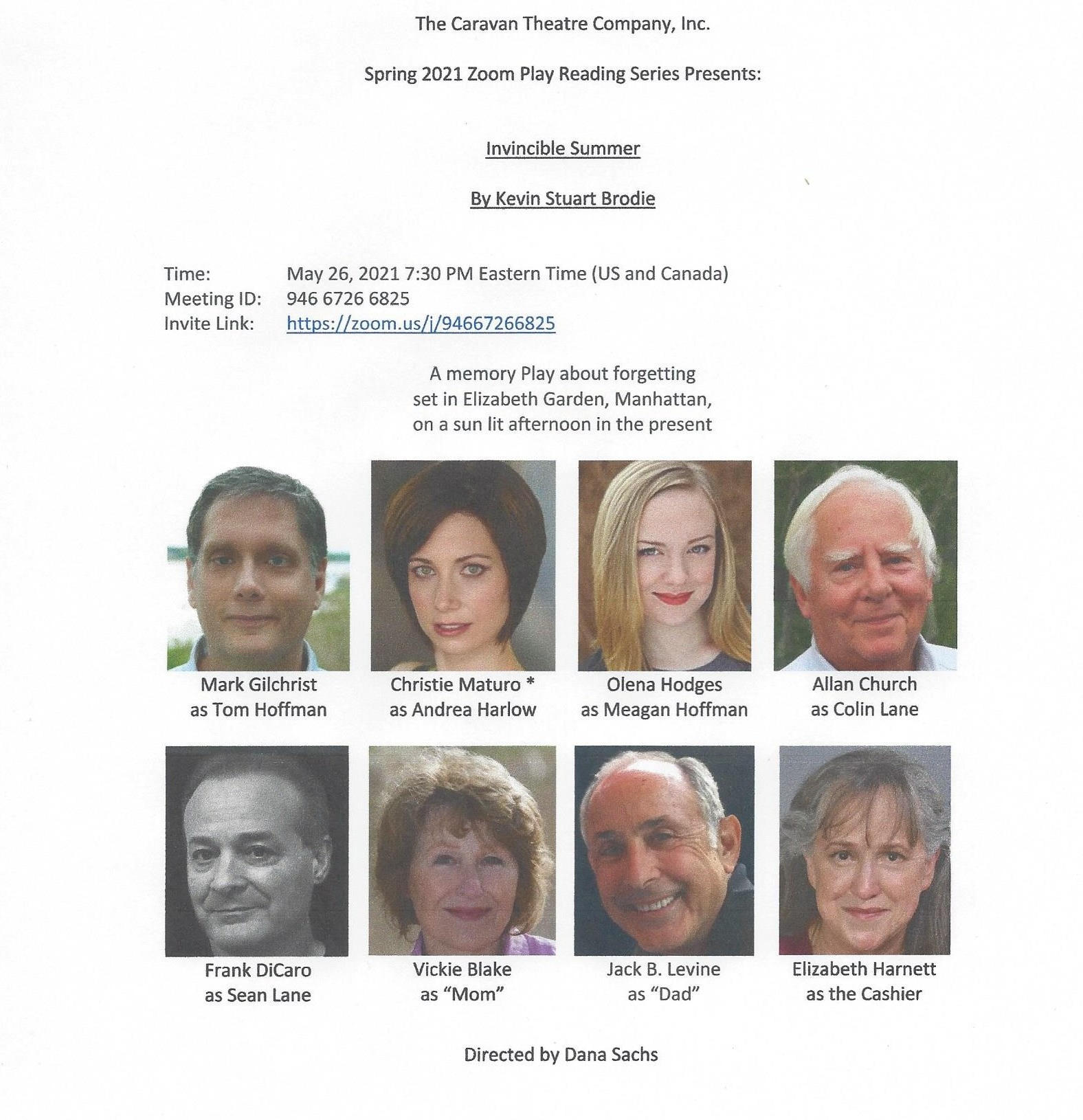
After the reading, Dana received an email from a friend of his who watched the reading. She had this to say:
“I cannot remember if I told you, but [my husband] died in September 2020 after a rapidly and eventually very debilitating case of Parkinson’s. So the show had special meaning for me. I felt compassionately seen and deeply understood by the author. I think that [my husband] would have felt the same, had he been alive to see it. The show had me in tears, in a good way. It was a relief I certainly didn’t expect, but which I greatly appreciated.All my best wishes to the author. If this show is any evidence, he is a very impressive, deeply compassionate, and insightful person. And I thought the performances were just magnificent. They rang so true and honest. Of course, I know they had a wise, highly competent, and very intelligent director. You did a great job!This play and this production are a gift to all, but especially to those of who have either been directly affected by this terrible disease, or watched someone close go through it. Again, I cannot thank you and everyone else enough for all your efforts, and for sharing such a deeply moving work of art.”
As a writer, I don’t believe I have ever received a higher compliment.
There is more ahead for “Invincible Summer,” including another reading in August, and hopefully its stage debut in Brooklyn this fall.
In the meantime, if you’d like to watch a recording of the Zoom reading, it is attached below:
https://drive.google.com/file/d/1DFEURBqbdoIKUJjmJ87DaSTGW7cBHgui/view?usp=sharing
The Haircut that Changed My Life
No, this is not the title of my first YA novel (although, not bad, I daresay.) This is literally the story of how I moved from a 500 square foot apartment to a two story, two bedroom house in less than a month. And it did all start with a haircut.
Dorrie has been cutting my hair for 21 years. When I started going to her, she was in her early twenties, not too many years removed from cosmetology school. Now, in addition to being a veteran hair stylist, she also runs her own business, holds a real estate license, and is a landlord. About fifteen years ago, she purchased a seen-better-days house in Old Saybrook, one of the more scenic coastal towns in Connecticut (and the former home of one Katherine Hepburn).
Dorrie put a lot of time, energy and money into the property and has been renting it out ever since. Given that I was now in a place in my life I was interested and ready to move into a house, I decided that at my next haircut I would inquire about the property. Even though it would be a change from the quiet, rural lifestyle I had enjoyed for the last twenty odd years, it was two blocks away from the water, and a fifteen minute walk to a town center packed with cafes, a bookstore, restaurants, and even a Ben & Jerrys. Being near the sea and having a sidewalk life is something I have missed since my college days in Santa Cruz. How fortuitous it would be if Dorrie’s rental would be available this summer–the ideal time for teacher’s to relocate.

I never even got a chance to ask. When we were exchanging the usual pleasantries (“How was your weekend?” ) she mentioned that she spent the entire weekend cleaning the house, because her tenants had just moved out. I asked if she had yet found a new tenant, and she had not. I told her I was very interested and would love to see the place. She agreed to show it me the following weekend.
Three and a half weeks after the haircut, I was moving in.
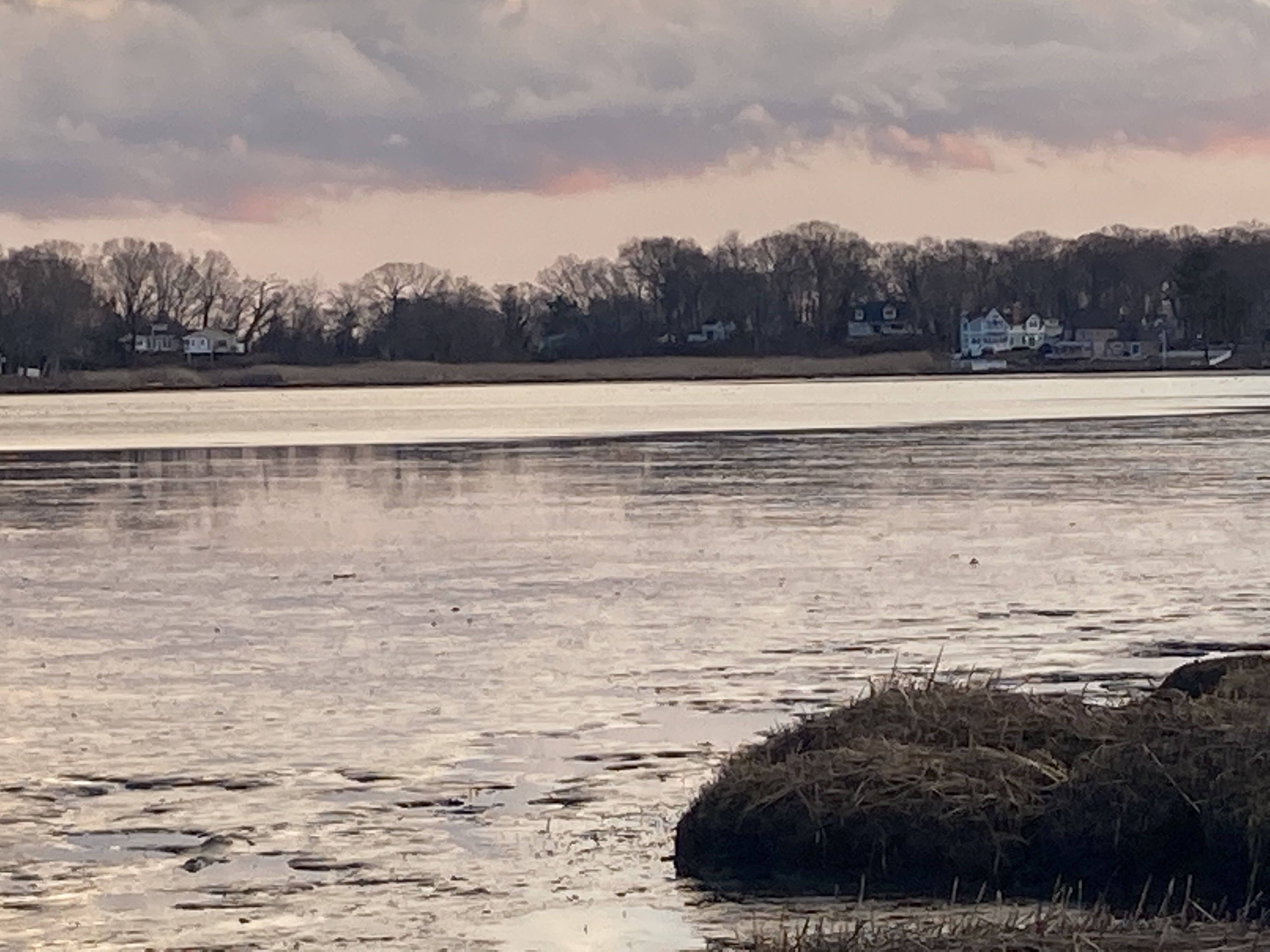
Packing and organizing a move that quickly in the winter while I am working every day was stressful, yet somehow I managed to get it done. The hardest part was asking my good friends and landlords Jason and Amy if they would be willing to let me out of my lease early. I am very fond of them both (and their entire family), and when I moved into the apartment above their garage five years ago it was exactly what I needed. I was recently divorced, financially beleaguered, and the apartment (and their company) in a beautiful country setting was comforting and healing. But it was now time to move on. Happily, they understood, and we quickly came to an amenable financial arrangement.
So here I am in my lovely new home, in a beautiful, charming seaside town. Given it is my spring break, I decided to take a couple of days to take my own writing retreat (since the one I usually attend in January was preempted by COVID). As I write this, I can smell the sea on the breeze coming in through the window. Two blocks away, at the South Cove, two osprey are protecting their eggs in a nest, where there are egrets, swans and cormorants (and even deer) hunting and resting in the nearby salt marshes.

And on Easter, Darlene’s son and grandkids were here, and we all comfortably fit. There are few things in my life that would prompt me feel more grateful,
All of this makes me wonder: what life altering event will follow my next haircut?
So Not Tired of Winning
I know I haven’t posted in a while. Teaching, as you can imagine, has become an energy-sucking challenge, forcing some projects to the back burner. Sadly, this blog found itself stuck behind the saute pan and the teapot. Today I intend to move it the front.
I do have much to say about the current state of teaching. I have been so immersed in it over the last four months that I felt I needed some time to process and develop any real perspective. I think I am just about prepared to begin commenting on it–but not this time. Instead, I want to offer something of an overview of my year in writing.
Of course, this year was ghastly in so many ways. Aside from the Covid-19 pandemic, I lost my mother this year. I also lost my agent and his husband to the coronavirus, and Darlene’s mother also passed away. It has been a frustrating, exhausting, heartbreaking year.
And it’s an awful cliche, the worse kind perhaps, to say that life still goes on. And of course, it does. In spite of everything that went wrong this year, there were some things that went right. I’d like to share those with you, if you can pardon the self indulgence.

February
I am interviewed by the Wordpeace blog.
April
I learn that I have been named a writer-in-residence at Trail Wood, the historical home of naturalist Edwin Way Teale.
May
Darlene and I take a storytelling class together. We enter our very first story slam–and I win (scroll down to the audio files to hear my story).

June
My screenplay “Ashes” reaches the finals in the StoryPros Screenplay Contest. I submit a revised copy to the contest again and reach the finals a second time in December.
July
My play “Invincible Summer” reaches the semifinal round of the American Association of Community Theater’s annual new play festival
August
“Ashes” finishes fourth in the annual Writer’s Digest Competition. Another screenplay I entered in the contest, “Ravine,” receives an Honorable Mention.
A poem entitled “Relics” is accepted for publication in the Schuylkill Valley Journal.

September
A poem entitled “The King is Dead” is accepted for publication for the Wising Up Anthology called “Goodness.”
“Invincible Summer” reaches the quarterfinals of the Screencraft Stage Play Contest.
November
A screenplay entitled “Season of Mists” reaches the quarterfinal round in the Emerging Screenwriters competition.
“Invincible Summer” is accepted into the Jocunda Music, Film and Theatre Festival.
December
“Season of Mists” is a winner in the Madras Independent Film Festival.
“Ashes” reaches the finals for the Visionfest Screenwriting Competition.
“Season of Mists” is selected for the Kalakari Film Festival.
Being a typical insecure writer, it is easy for me to focus on the festivals and contests I didn’t win–especially ones I have placed in before. But that is a rabbit hole no one wishes to fall down. I am doing my best to focus on the positive, and as you can see, there is reason to do so.
In one of the few times I will ever paraphrase the President, I have not gotten tired of winning. We’ll see if I start to get tired in 2021…
.
Trail Wood Photo Album: The Outdoors
My previous entry included photos I had taken to give you a sense of what it was like inside Edwin Way Teale’s home. This post will share some of the exterior photos I took during my residency that I have yet to share.
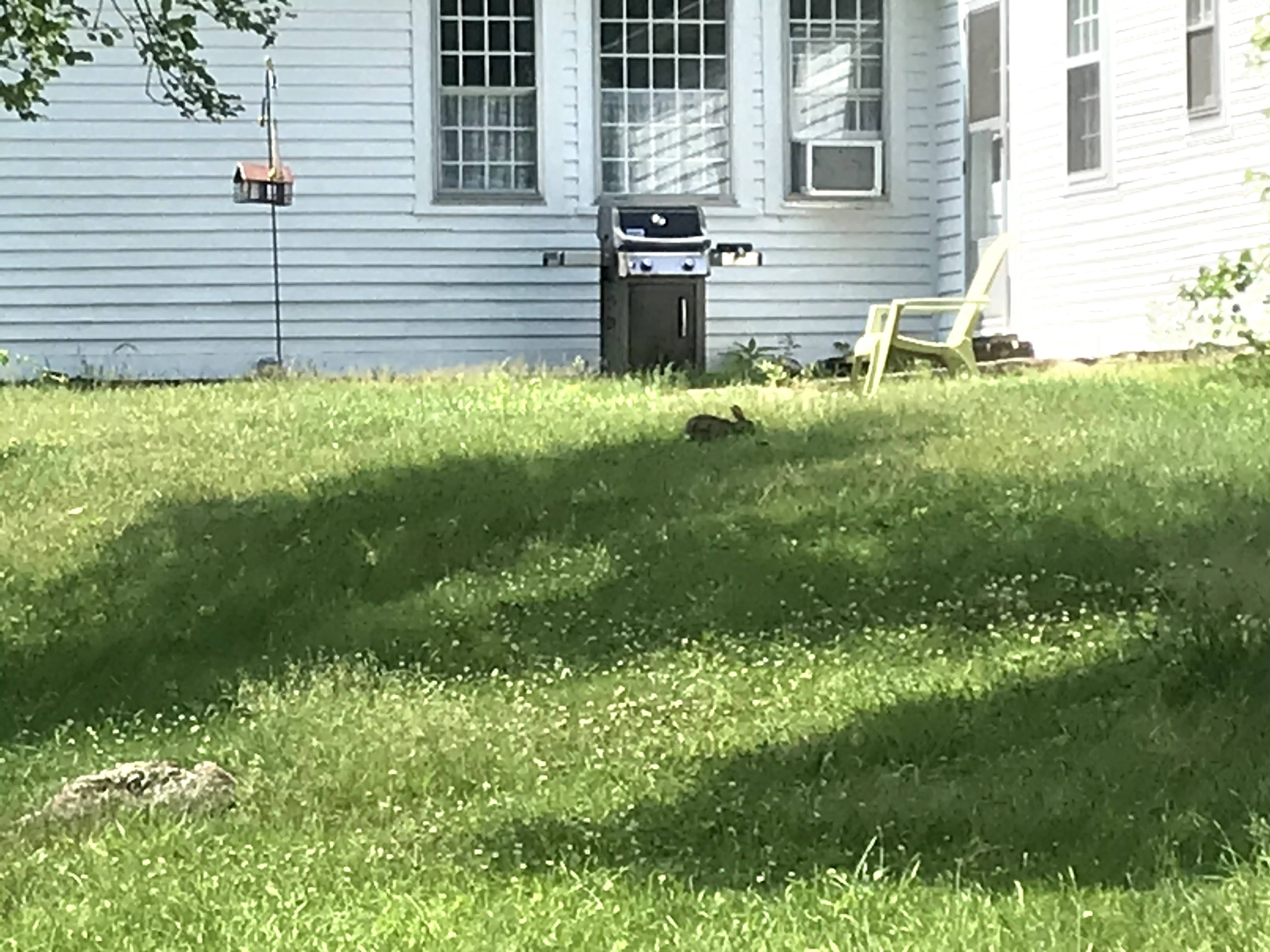
This photo is the back entrance to the house. I took it from the shaded picnic table wherein I took most of my meals. There are also three bird feeders set up which allowed me to see many grackles, blue jays, red winged blackbirds, cardinals, nuthatches, and goldfinches. I prepared most of my food ahead of time, so I unfortunately didn’t get a chance to use the grill. Also visible is one of the four rabbits that frolicked in the grass around the house.
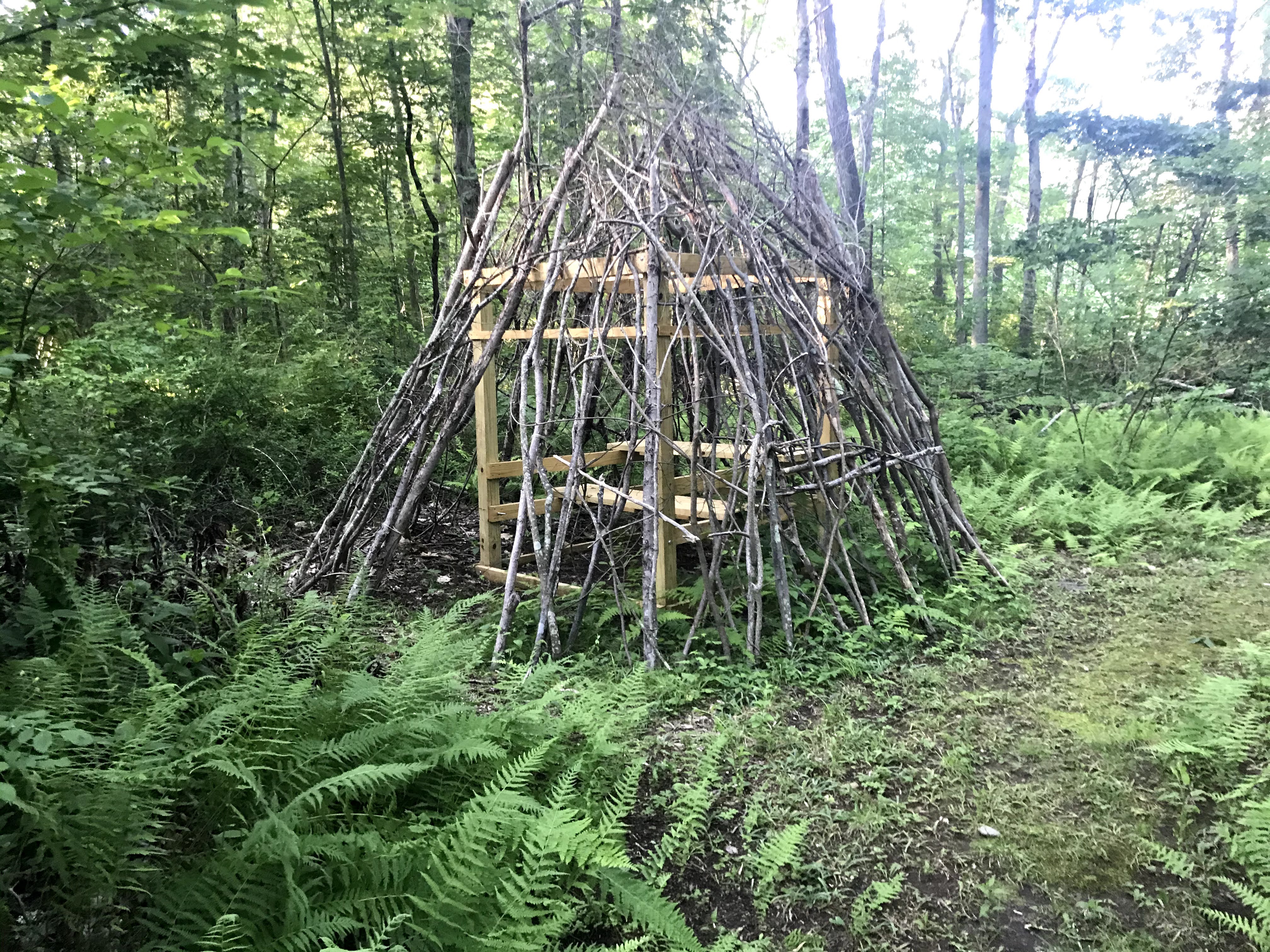
This is a reproduction of a hide Teale would use to sit, watch, listen and write. The frame has been newly restored, and visitors and residents are encouraged to collect branches to add to the frame. The bench is quite comfortable, and given it’s proximity to a nearby stream, it is easy to be quiet and listen.
This is the large beaver pond. I only got to see the beavers at a distance in the early morning, so sadly no good photos of them. If only I had a kayak…
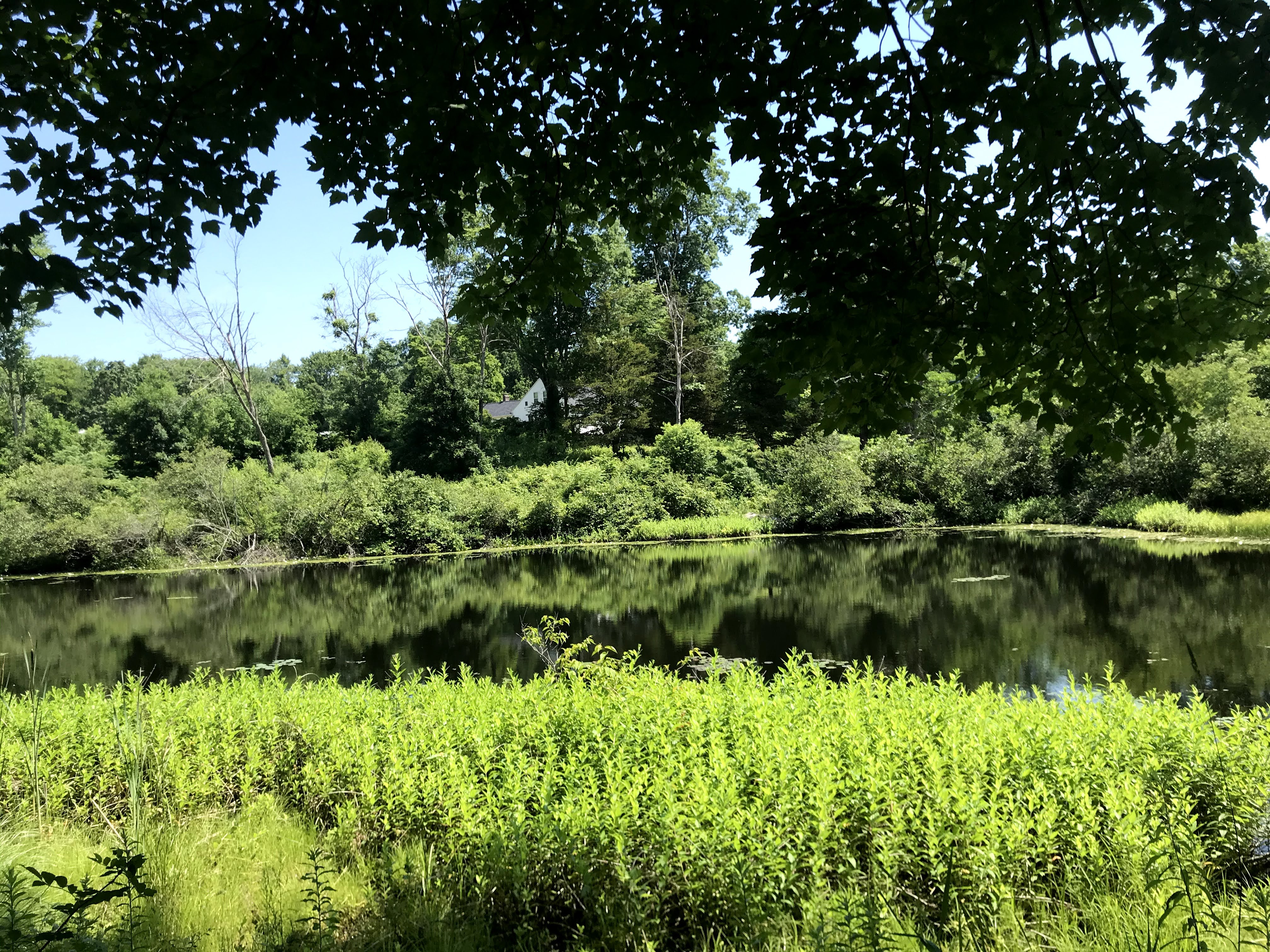
There are six different trails that cut through the 168 acre preserve. Happily, most of the them intersect, so it’s easy to create new routes each time you head out. This is one of the trails, along with views of flowers and freshly blooming black raspberries.


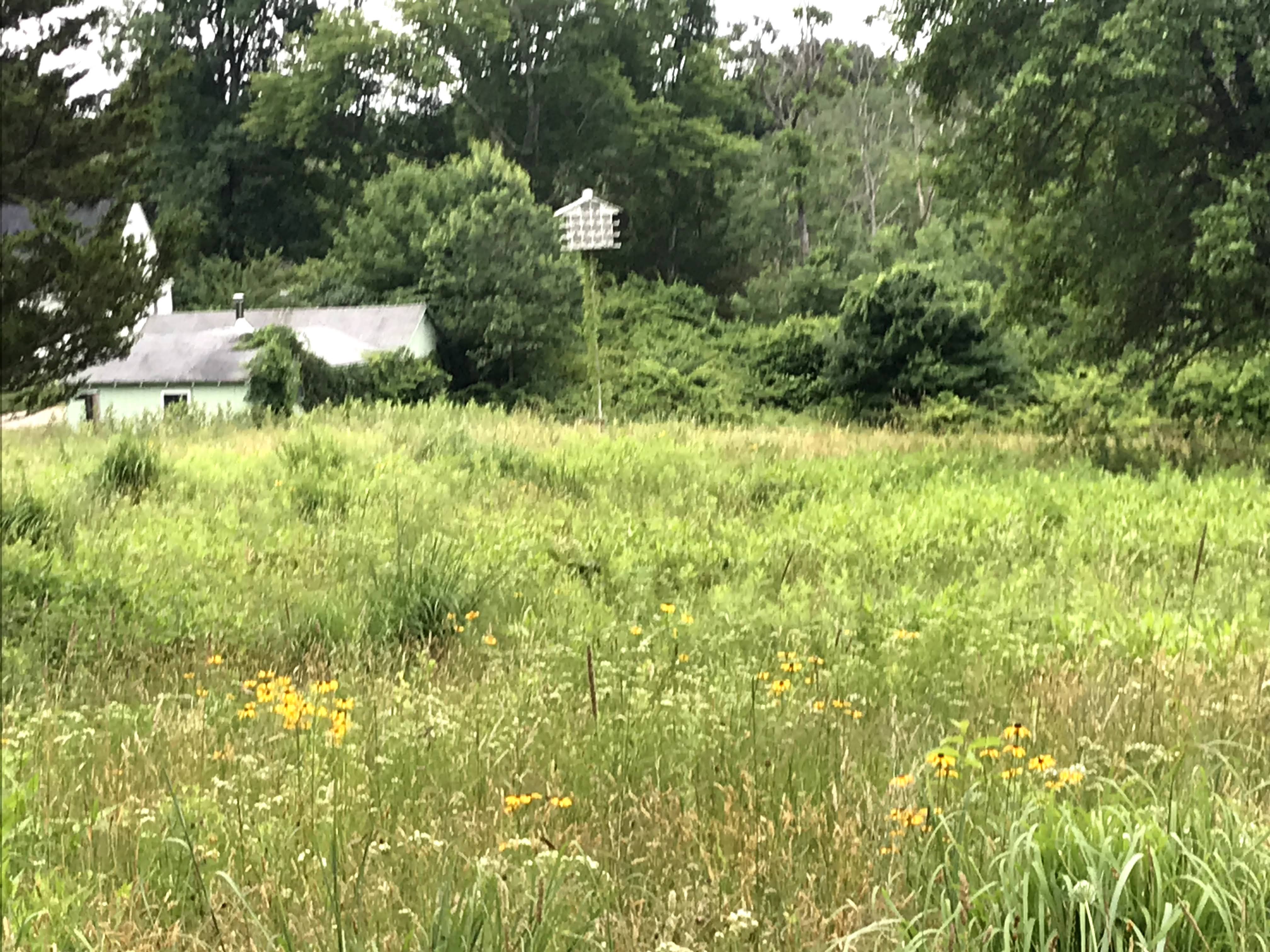
This is a view of the meadow that you cross when you leave the house and head onto the trails. As you see, the Audubon Society has built a lovely martin condo. The building in the background was the Teale’s garage; it is now Trail Wood’s visitor center.
I hope from all the writings and photos I have assembled, you have a reasonably clear picture of what it is like to spend a quiet, solitary week in such a place. In September, myself and the other residents will have a public reading to share our work. It will be great to meet the other residents and see the work Teale’s residence inspired them to create.
Trail Wood Photo Album: The Indoors
I recently completed six separate entries for my time as writer-in-residence at Trail Wood, the former home of Edwin and Nellie Teale. I took several more photographs than what has appeared in previous posts, so I wanted to share some of those images. Hopefully, the photos will give the reader a deeper feel for the environs of Trail Wood.
First, some images from inside the house.


This is the kitchen. You can see that it’s had some recent updates; I think you can also get a sense of how much of it remains from when the Teale’s cooked and at here.
This is the area I set up as my workspace. As I said before, it appears to be a dining room, but it is not adjacent to the kitchen, so I am unsure.
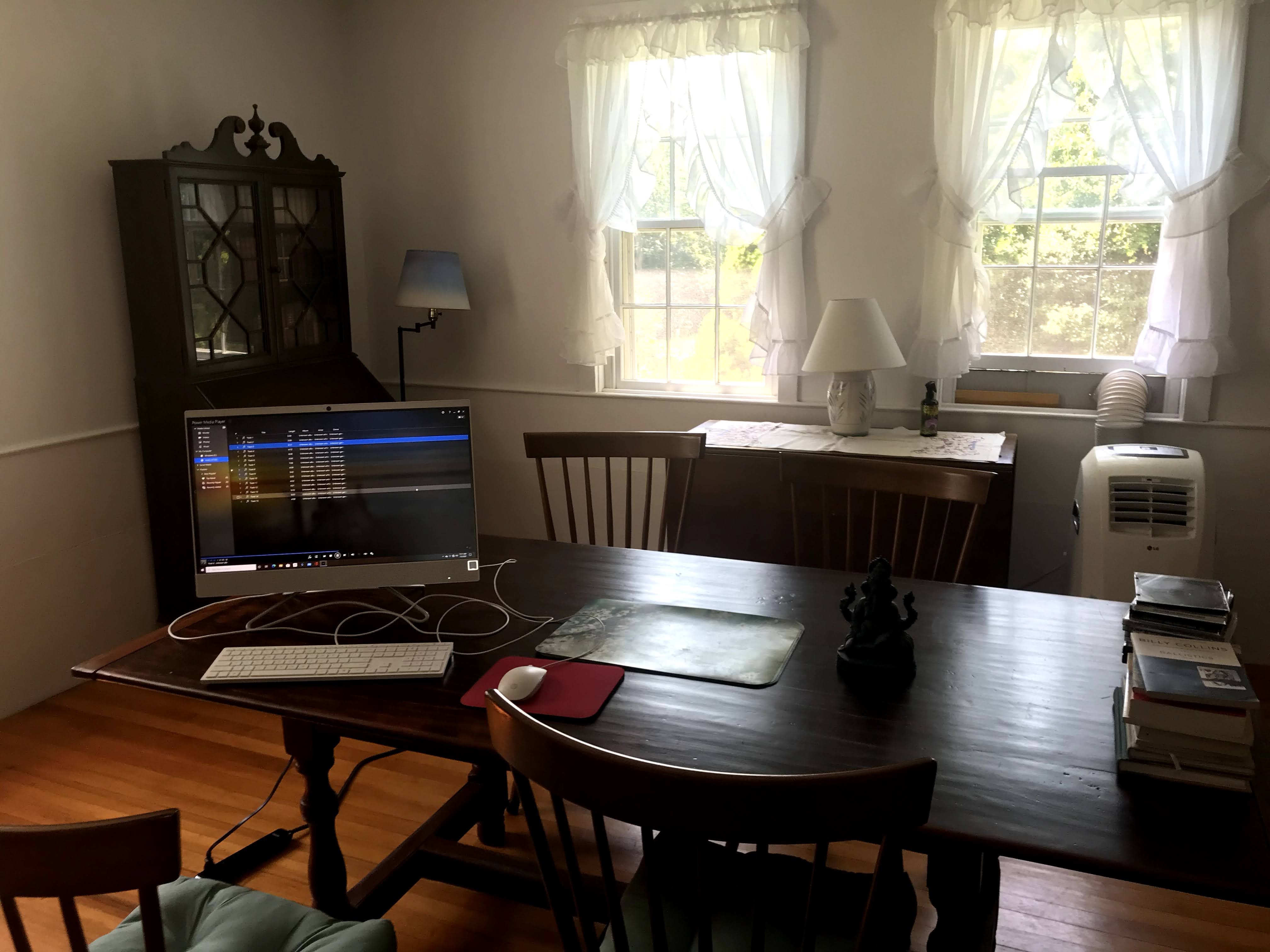
The bookshelf in the corner contains many of Teale’s books; they are filled with his marginalia. I always love finding marginalia in a book; it feels like I am dialoguing with a previous reader.
These shots are of the living room, which was a comfortable spot to read, and hand write into my journal.


The fireplace is usable, but as it was July, it stayed dormant during my visit.
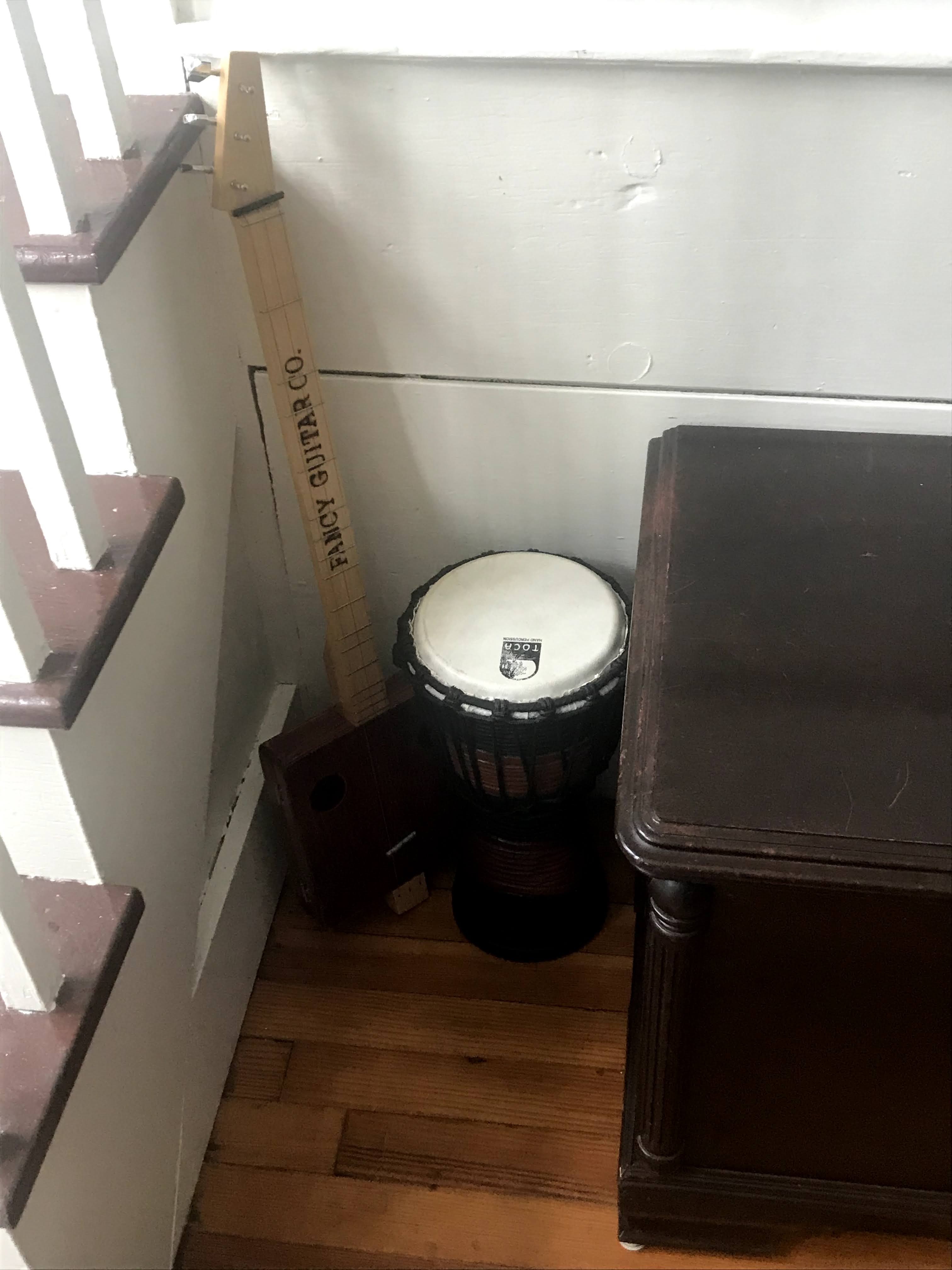
Also in the living room was this guitar and drum. I don’t know if they belonged to the Teales (the instruments seemed a bit too recent), but I like to imagine them wiling away a Saturday night plucking and pounding away…
These shots are of Teale’s office, which was left exactly as Edwin left it when he passed away in 1980. When Nellie agreed to leave the house and lands to the Audubon Society, her only requirement was that his office remain untouched.


For the next entry, I will share some more photos of the outside.
Trail Wood Journal, Day Six
Hard to believe this is my last full day. And it’s nearly 6pm, so it is almost over. I’m writing from the summer house–I wanted my last entry to be written from there, because it really was my favorite place to sit and write. It started to rain as we walked down here. This was a perfect place to watch the rain hit the pond.
I never noticed a bird’s nest that sits right at the entrance to the summer house. I’m glad I spotted it, and the chicks don’t seem to mind me. No sign of Gil Scott, sadly.
Today, I completed the rewrite of the screenplay–another fifty pages. It still needs a lot of work, but at least it’s a coherent story. I feel better about it for sure.
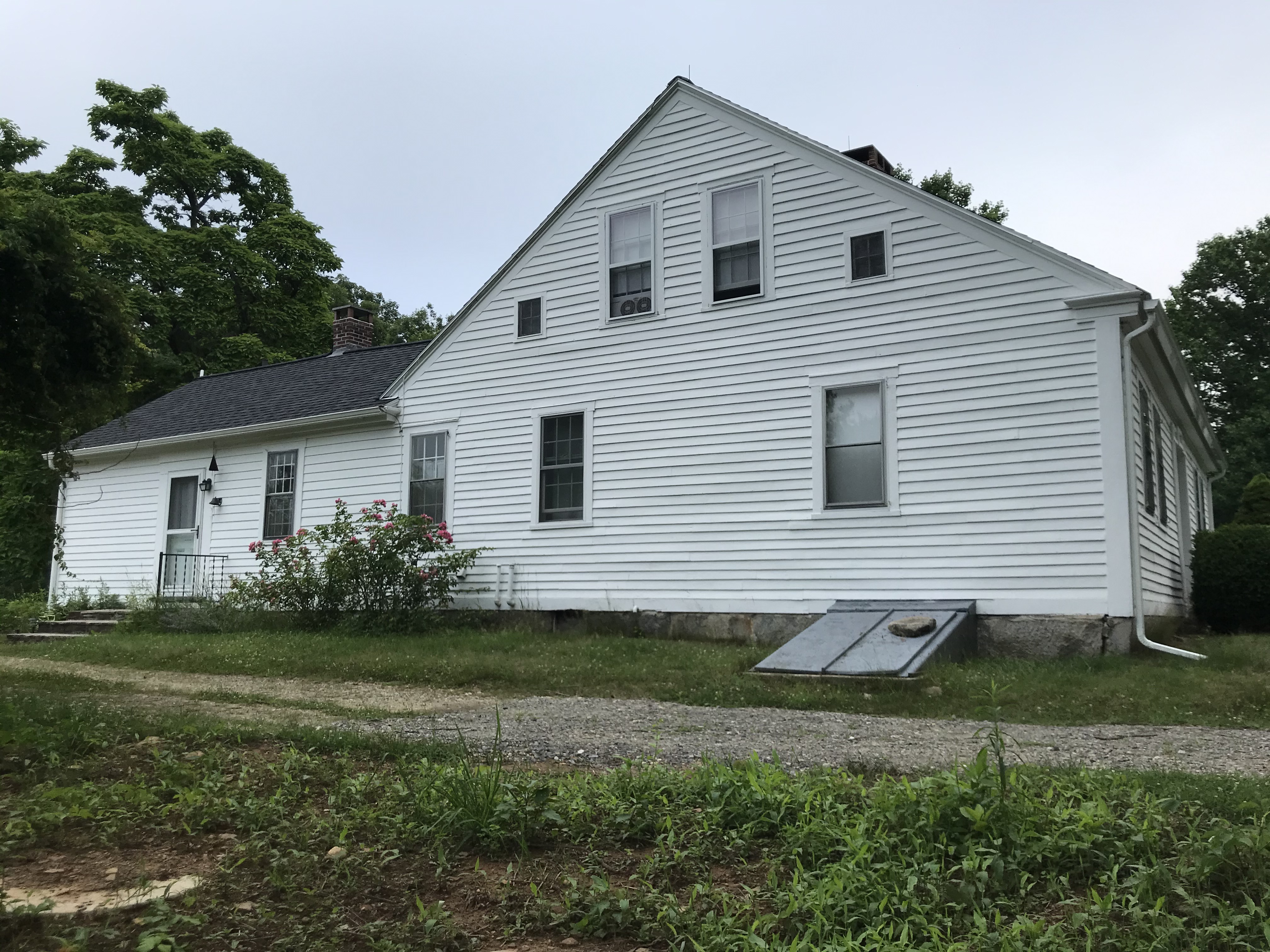
A view of the Teale house
I also wrote another poem today–so excited to have hit that goal. And I have ideas for several more. I will have plenty of work to share at the reception this fall. And even though it was kind of lonely (this is not a place for someone who struggles with isolation and depression) and the bedroom reeked vaguely of mouse urine, it was a successful residency.
Going to put some effort into getting more poetry published upon my return, particularly if I’m going to self publish a collection. It’s been a very long time since I published a poem. I’ve been emphasizing script writing, so it’s nice to be doing poems again.
So that’s about it. The only thing left to write is my message to the other residents in the guest book. Tomorrow, I will pack up and head home.
Postscript: I have several more photos to share. The next post will be a photo album, with my descriptions, to hopefully provide a deeper picture of my experience this week,
 Danger Is My Business