In Monet’s Garden

Monet’s actual water lilies.
When I was a child, my father had a print portraying Claude Monet’s garden in his bedroom, and another of “Water Lilies” in his office. I remember being entranced by these paintings–they were beautiful, yet also very calming. During some of the darker moments of my childhood, I would often stare at these images, and wish I could escape to them. I wonder if my father sometimes wished for the same thing.
As I got older, I was shocked to discover that these gardens and lilies did exist. Not only that–I could go see them for myself in Giverny, a tiny hamlet an hour outside of Paris. I learned this from an East Asian professor, who explained that Monet was fascinated with Japanese Zen artwork–so much so that Monet’s house was filled with works of the Japanese Zen masters. I had appreciated the meditative effect of studying these Japanese artists, and now I knew that my similar reaction to their works and Monet’s was no coincidence.
Today, I finally got to see Monet’s garden. And I have to say it–it was like the paintings had come to life. The garden itself I could only describe as beautiful chaos. Every kind of flower you could imagine is there. Sunflowers and lavender? Well, this is the French countryside. Of course! Hydrangea? In several colors. Single yellow roses jutting out from nowhere? Sure. How about something crazy like wild blueberry bushes? Those, too. And of course–water lilies.
Just as his impressive garden inspired the great painter’s own work, everywhere you looked on the grounds you would find a painter or sketch artist themselves inspired to create. For myself, I just wanted to sit quietly and absorb everything. All of these images and colors that I had once yearned to escape to were all here in front of me. Like a palette with more hues than I could possibly imagine.
And sure enough…Monet’s house is itself one of the most impressive galleries of Japanese artwork I had ever seen. Life is good when it meets your high expectations.
Keeping Company with Shakespeare

I know that the Shakespeare and Company bookstore on the Left Bank of the Seine is not the original. It does still have a great deal in common with its predecessor, including an impressive selection of books crammed into a very tiny space. The bookshelves themselves are ancient, rich with the character of another time. Even the woman who currently owns the store is named Sylvia, after the original store’s founder–the impressive Sylvia Beach.
Ms. Beach was knows for hosting the likes of Ernest Hemingway, George Bernard Shaw, Gertrude Stein, and Ezra Pound. Sylvia also published James Joyce’s “Ulysses” when no other publisher would go near it. Her shop became a center of great literature, intellectual discourse, and readings from some of the most important writers of the twentieth century. Put another way–there was no way I was going to spend a week in Paris and not visit.
It did not disappoint. The ghosts of the great writers and history it contained appeared present in the store, and most customers seem to sense this. Bookstores tend to be quiet places, but browsers moved through the stacks in what I can only describe as a reverent silence. Climbing the ancient wooden staircase to the top floor revealed a room full of used hardcovers, and down the hall a group of children enjoying an enthusiastic reading of “Alice in Wonderland” (sadly, not by Lewis Carroll).
I emerged with a charming collection of John Keats’ poems. As many of you know, Keats is a particular favorite of mine. Indeed, I titled one of my screenplays “Season of Mists.”
A couple of other touches remain from the old store: you can rent an old manual typewriter to work on your manuscript. Where would you take it? The rooms upstairs are still let out at little or no charge to working writers.
Hmm. I think I’ll be coming back to Paris.
Yes, the Eiffel Tower
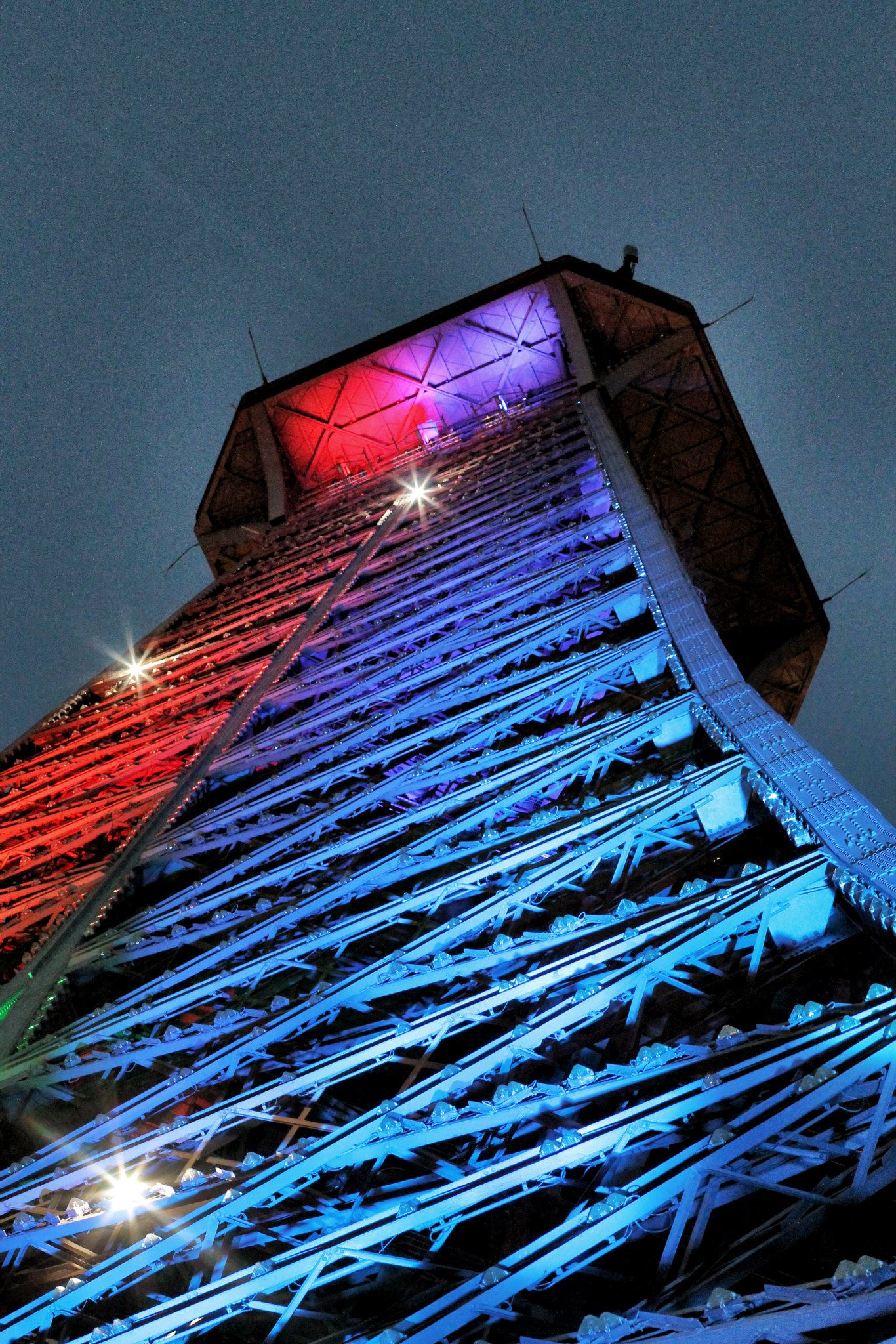
A view of the Tower at night from the second level.
I know what you are thinking–what else could he possibly have to say about the Eiffel Tower? One of the most iconic sites and images in the world. One of the few structures where you could show a picture to just about anyone on earth and they would recognize it instantly. It has been filmed and photographed as many times as there are rivets in it (2.5 million). There are fake versions at Epcot Center in Florida and in Las Vegas. It is the ultimate tourism cliché.
And yet…if you have actually been to the tower, you know when it is standing before you, none of that matters. It is an awesome structure. I don’t think you can really appreciate just how impressive it is until you find yourself dwarfed at its feet. You expect the Empire State Building to be huge, and it is. You expect the Burj Khalifa to have a view of what looks like the entire Arabian Peninsula, and it does. Perhaps because the Eiffel Tower exists for no other purpose than to look at and from it, we don’t anticipate its sheer power. That is part of what I think overwhelms us in its presence.
It is also a work of architectural genius. Built in slightly over two years, it boasts a modular design that allowed it to be assembled in pieces. Once the lower pieces were fastened, the tower could then support the weight of the next piece to follow. Given the tower is comprised of almost nothing but iron girders, air and wind easily passes through it so it never shakes or rocks. I think the most amazing thing about it is that the iron in the tower is used so efficiently that if it were melted down, and the liquid were spread out across an area the size of the tower base, it would be…two and half inches deep.
We visited the tower at night, courtesy of a Skip the Line tour from a company called Easy Pass. I highly recommend this, because you do indeed skip the long queue waiting to enter, and find yourself at the second level very quickly. Our tour guide was a smart, funny, charismatic young woman named Ellen. Ellen hails from Dublin, so we learned about the tower, Gustav Eiffel and much of Paris through the sound of a charming Irish brogue. If I had been a single man in my early twenties, I probably would have proposed to Ellen right after the tour.
But I am almost none of those things, so I instead enjoyed the tremendous views and the absolute wonder that is the Eiffel Tower. It is not what you would expect. It is so much more.
Chartres During the Day
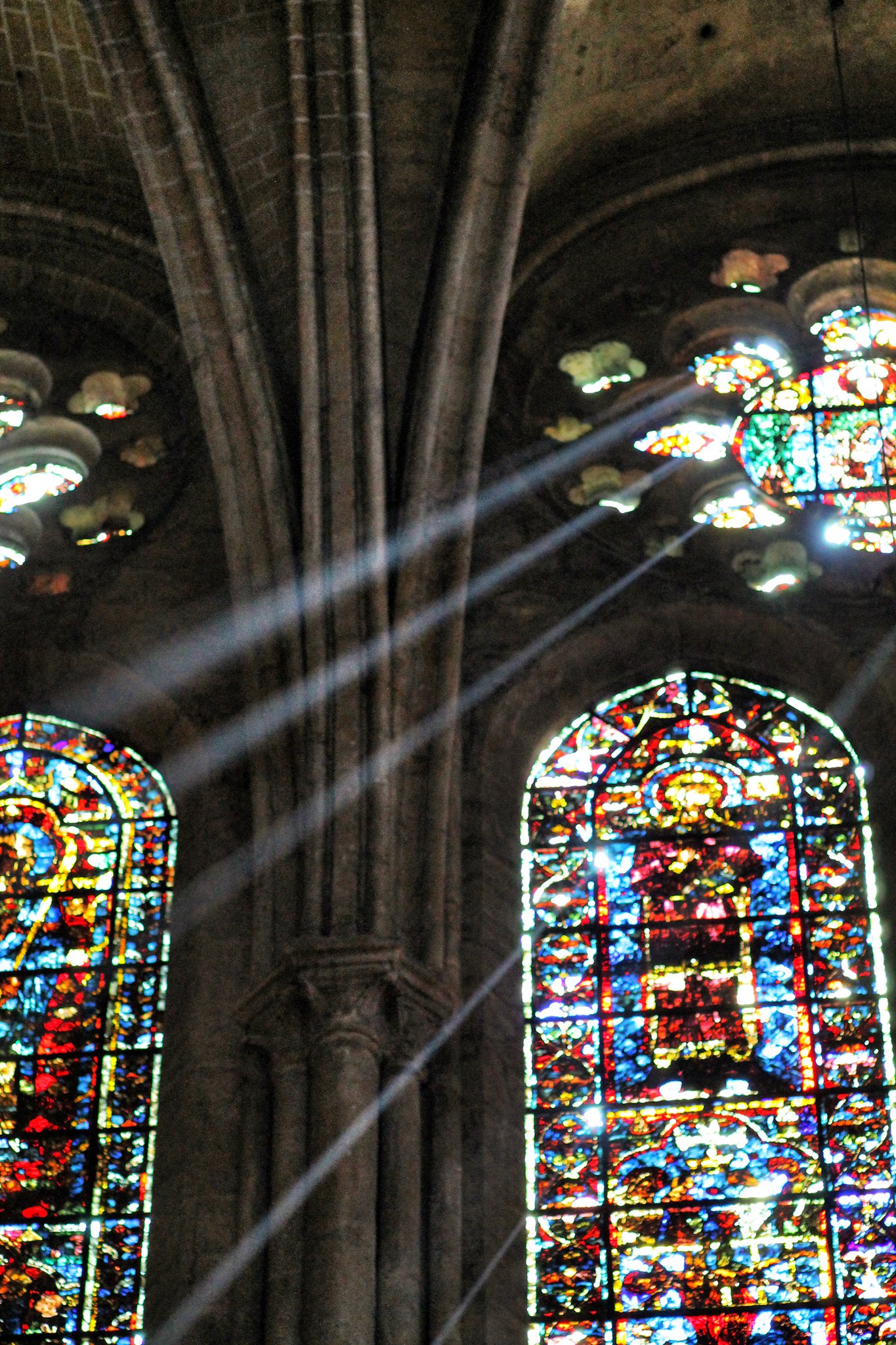
The Cathedral—officially named the Cathedral Notre-Dame de Chartres—was built in 1194. It was a replacement, however, for the original that had burned down. Indeed, a church devoted to the reverence of the Virgin Mary has sat in this spot since the fourth century. Part of the Cathedral floor actually remains from that period.
The place is huge. The nave is 427 feet long, 20 feet wide, and 120 feet high. Even the pipe organ makes you feel small; it is 80 feet off the ground, 30 feet wide and about 20 feet tall. Most impressive—and beautiful—is the 28,000 square feet of stained glass.
One of these glass windows is called the “Blue Virgin Window.” This mid-twelfth century stained glass depicts Mary dressed in blue on a rich red background, cradling Jesus while the dove of the Holy Spirit rests on her shoulder. For centuries the Blue Virgin has been a must see for pilgrims.
Those same pilgrims also continue to be in awe of Mary’s Veil. The veil was supposedly worn when Mary gave birth to Jesus. It is displayed behind a locked gate, in a glass window with a golden frame. Recent tests confirm that the material itself and the weaving technique date the cloth to the first century, so if this isn’t the genuine article, it’s from the same time period. No bogus Shroud of Turin here.
I think the most moving part of the day occurred in a small chapel in the Cathedral know as the Chapel of Our Lady on the Pillar. It is traditional for pilgrims to kiss the column in reverence and prayer, and I noticed a South Asian woman—dressed all in blue—doing just that. When she rose, and turned to leave the chapel, I also noticed she was pregnant.
Later, exiting the Cathedral, I saw her sitting outside, gently weeping. I don’t now how far she had travelled—the Catholic community in Mumbai, perhaps? —but I imagine the emotional and spiritual power of her experience made it worth the trip.
The great literary critic and avowed atheist Christopher Hitchens once called being in Chartres the closest to holy he has ever felt. That alone should tell you about the Cathedral’s majesty and mystical beauty.
Chartres at Night

We arrived in town tired from a day of travel, so we headed to a café in the shadow of the great Cathedral for a late dinner. We knew that they made an effort to bathe the 13th century behemoth in light, and thought we could take an after meal stroll and enjoy the decoration. We had no idea what we were in for.
First of all, they do not simply bathe the Cathedral in light. They instead project an entire light show on the building’s façade, using its architectural dimension and design as a rich palette for the colors. Part performance art, part animation, part spiritual celebration, it is unlike any light show I have ever seen.
As you watch, the building transforms and blends into a kaleidoscope of hues, then shifts to three-dimensional calligraphic excerpts from scripture, to animated dancers “building” the cathedral before your very eyes. It is also synched to a gentle yet uplifting soundtrack comprised of electronic keyboard, harp, and gorgeous soprano singing. Hundreds of us stood there transfixed as the Cathedral—already regarded as one of the most beautiful in the world—transformed into something even more miraculous.
And we haven’t even yet been inside.
Provence: Day 6
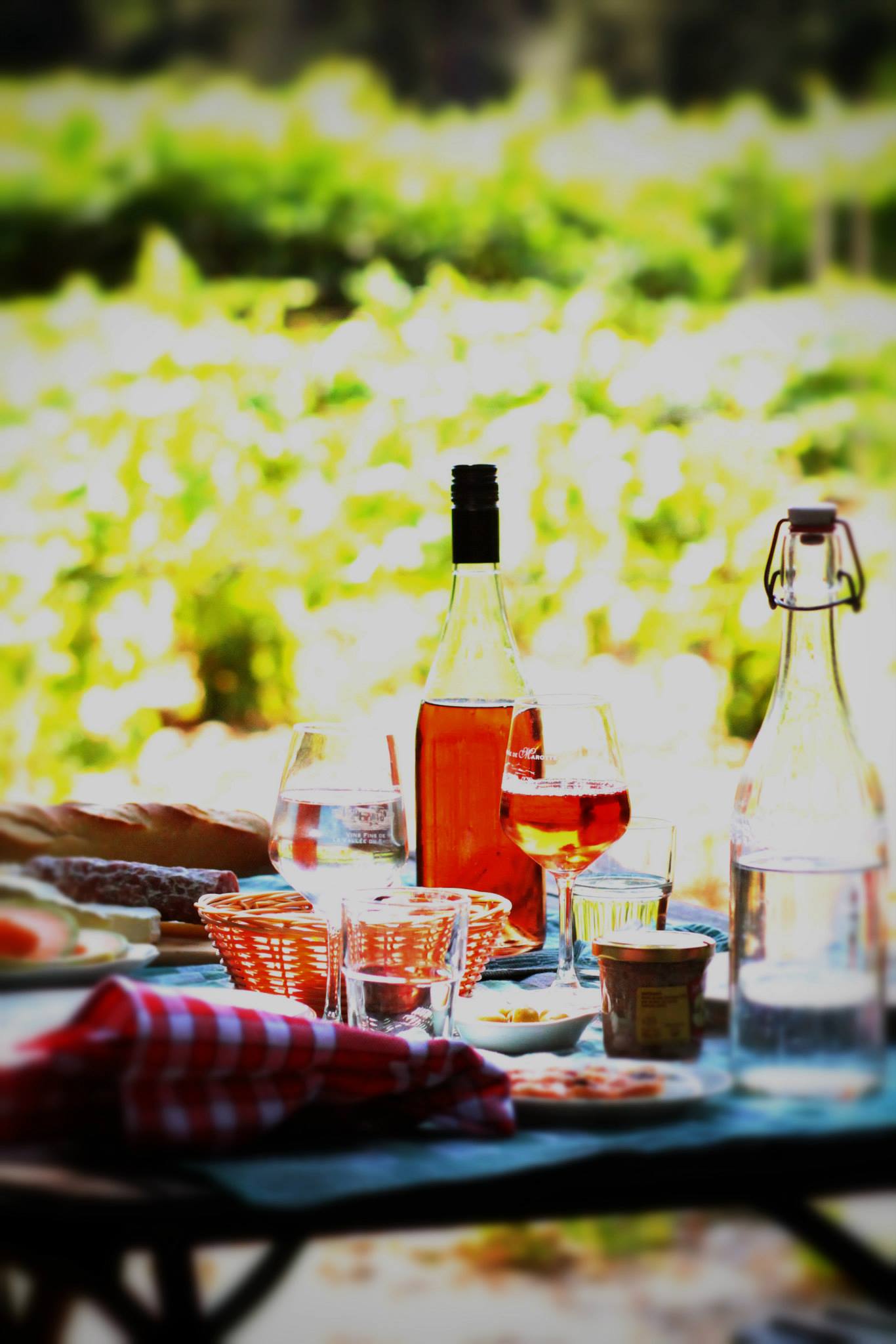
Table Vigneronne at Domaine de Marotte Vineyard
If you are wondering what happened to Day 5, it was spent mostly at poolside. It was a perfect, quiet day in the Provence sunshine, and I spent most of it breezing through Tina Fey’s “Bossypants.” Everything I just wrote is highly recommended.
Much of Day 6 was spent at the Domaine De Marotte vineyard, just outside of Carpentras. It is owned and run by a Dutch couple, Daan and Elvire Vandykman (I think spell check is about to explode) who moved here in 1998 with a dream of making great wine with love and care.
The vineyard is a former monastery—indeed, the main walkway through the vineyard is still in the sign of a cross. This seems an appropriate history, given that Daan and Elvire are intensely devoted to their pure, labor intensive, natural approach to winemaking.
Valerie was impressed by the wines she had at the tasting—all of which are named after one of the Vandykman’s four children. For myself, Daan hooked me up with his own delicious and refreshing grape juice. A singularly impressive host, he was running the tasting for three different couples, seamlessly shifting between French, Dutch, and English in explaining the different grapes and answering the guests’ questions.
After this, it was time for our Table Vigneronne—a picnic basket prepared for us that featured breads, cheeses, a bottle of one of their best wines, salami, four tapenades, and fresh melon. We found an empty table in the vineyard, and thoroughly enjoyed a delicious, peaceful meal amidst the grapevines. A perfect final day in Provence.
Provence: Day 4
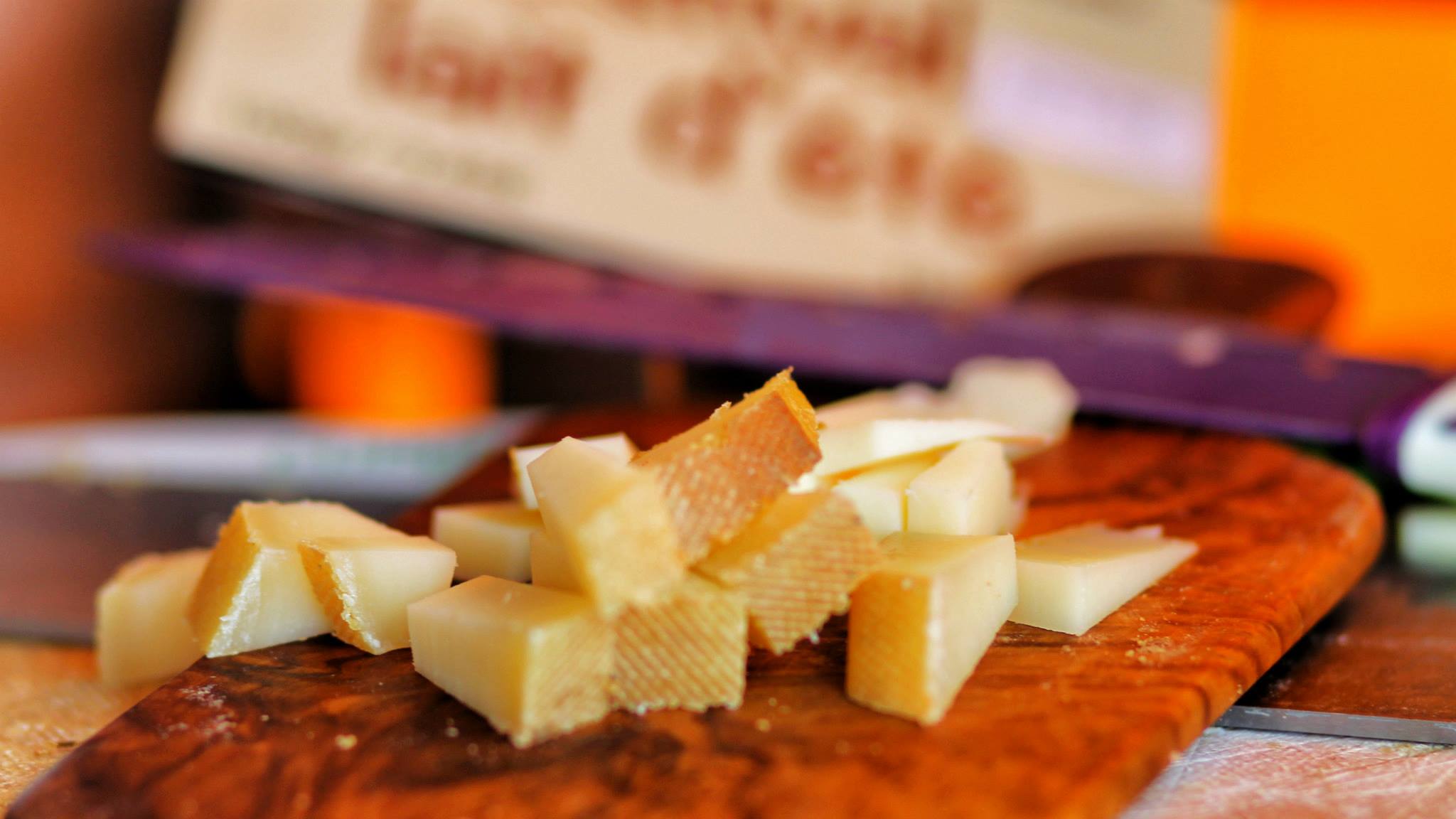
Cheese at the market in Arles.
A trip to Arles, a beautiful ancient city, known for its open-air market, two great Roman theatres (the Classical and the Arena), and one of Van Gogh’s most productive (read: manic) periods.
Given its proximity to Marseilles, there is now a considerable North African and Islamic presence in Arles. As a result, many of the vendors hailed from the other side of the Mediterranean, and some of the market offerings included Halal meats and a wide array of hijab choices. In addition, there were countless samples of fresh fruit (primarily melon), delicious pistachio nougat cut from a loaf about the size of an SUV, and many scrumptious cheeses to be sampled. And sampled again. And again.
After the market, we decided to take Rick Steves’ walking tour through Van Gogh’s Arles. We visited many of the locations of some of his most famous paintings, learned about his desperate loneliness, and his explosions of rage. We lunched at the famous Café la Nuit, a famous setting for a Van Gogh painting and where he famously argued with Paul Gauguin. Van Gogh became so enraged he chased Gauguin down the streets of Arles brandishing a razor. Later that evening, Van Gogh would use the razor to cut off his ear lobe and present it to Rachel, his favorite at a local brothel, insisting she “treasure this precious object.” Our lunch was far less dramatic.
Later that afternoon, we drove down to the Camargue, a beautiful nature reserve known for wild bulls, wild boars, and…pink flamingos. I had never associated pink flamingos with France before, but there were hundreds of them. We stopped along the road at one point to climb into a hide to get a good look at the birds and to take photographs. It was wonderfully peaceful, but then another couple showed up. They quietly took photographs, and then a third couple arrived. They too were unobtrusive and respectful. A few moments later, two busses packed with tourists spilled open and attempted to squeeze themselves into the hide that was maybe 10 x 4 feet. Were they going for some sort of record? It was at that point we retreated, and decided to move on.
Day 3: Provence in Ruins
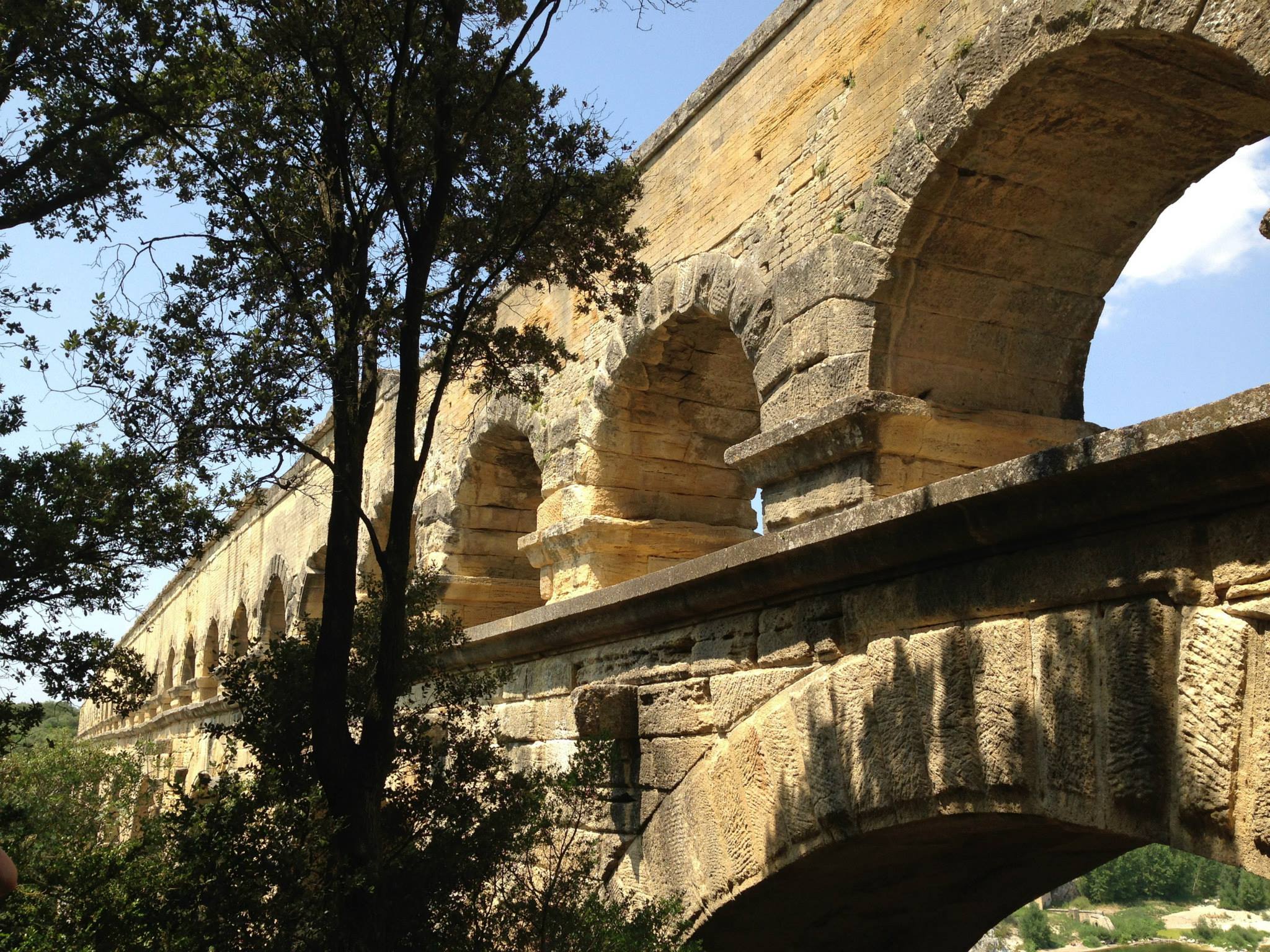
Provence takes its name from the Romans—this area was literally a “Roman Province.” It was established primarily as a retirement community for Roman soldiers. For some reason, Emperor Augustus didn’t want a large group of relatively young, well-trained idle soldiers hanging about the capital. So he sent them here. Augustus was clearly on to something—if President Obama sent me here to retire, I would gladly take him up on it.
As a result, Roman ruins are a frequent sight throughout this area, primarily in places like Arles, Orange and Nimes. Arguably the most impressive is the Pont Du Gard (photo above). A perfectly preserved Roman aqueduct built around 19 B.C., it was an important link of a 30 mile canal that, by dropping one inch every 350 feet, supplied nine million gallons of water per day to Nimes.
The fact that something like this was constructed 2000 years ago and still stands is a testament to what the Romans were able to accomplish with fine engineering, patience, and thousands of slave laborers. The bridge was put to the test in 2002 during a period of torrential rains and intense flooding. Would the bridge be able to withstand the flooding? The Roman engineers had designed buttresses at the base of the bridge to divert floodwaters away from the feet of the arches. To everyone’s astonishment, the buttresses worked and the bridge held its ground. By contrast, my oil tank lasted three decades.
When you visit the Pont Du Gard today, you can walk across it, swim beneath it, follow countless hiking trails on both the right and left bank to appreciate its beauty and majesty from a number of perspectives. No matter how you look at it, you can’t help but be awestruck at its beauty and longevity. In New England, a building that remains from the 18th century impresses us. Here, not so much.
Provence: Day Two
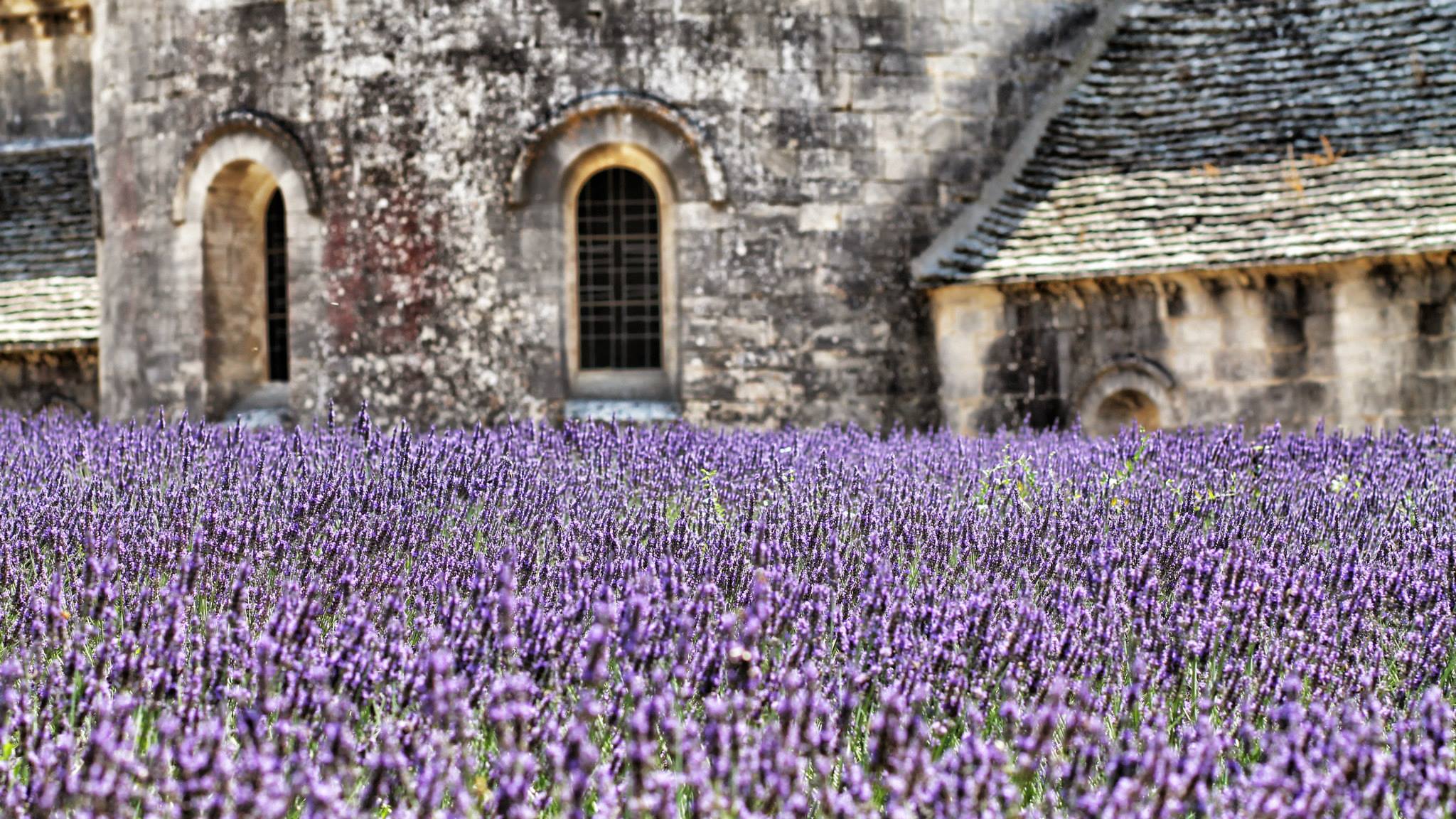
Lavender. Provence is so much about lavender. You hear this all the time, and then you get here and you finally understand. It grows everywhere, and is such an inherent part of the area’s economy, an entire museum is devoted to it.
The aptly named Lavender Museum in Coustellet will tell you everything you ever wanted to know about its history, growth and production. Know the difference between fine lavender and lavandine? I didn’t either, but now I do (fine grows by seeding, is cultivated carefully by hand, and used medicinally; lavandine is cloned, mass-produced, and is distilled into soaps, oils and candles). Curious about the distillation process of lavender, and how it has improved since the 17th century? Well, this museum is for you.
Of course, no museum experience would be complete without the tour steering you to the gift shop/boutique, where very attractive young people lovingly spread essential oils on your hands and wrists. Resistance is futile; we walked out with a sachet and several soaps.
As charming and fun as that was, nothing really prepares you for the lavender fields when you see them. The one we visited was at the Abbey Notre-Dame de Senanque (photo above), just outside the hill town of Gordes. As you pass through Gordes and begin descending the hillside towards the Abbey, the sight of what appears to be a massive carpet of violet immediately strikes you. As you close in on it, you can’t help but be amazed by its enormity and beauty.
The still-functioning Cistercian Abbey was built in the 12th century, and its sheer simplicity provides a breathtaking backdrop to the fields. The aroma is as intoxicating as you would imagine, but standed or seated amongst lavender in this monastic setting can’t help but quiet your mind. I found it had a sincere meditative quality that I did not expect—so much so that I didn’t mind the preponderance of bees, despite my allergies. The bees also were as uninterested in me, clearly finding the lavender just as captivating.
The photos do not do it justice, and the descriptions are not hyperbolic—you haven’t really experienced lavender until you’ve experienced it in Provence.
Provence: Day One

Awaiting our arrival in Provence!
A plane, a train and an automobile. That is not meant to be an aphorism: that is literally the path we took. Flight from Boston, train from Paris, a rental car from Avignon, and we arrived at our gite: Mas Saint Antoine in Rognonas.
As I write this, a thunderously loud chorus of cicadas echoes from every direction. Local legend has it that God sent the cicadas as a penance for the locals’ laziness, so he sent “la cigale” to disturb their afternoon siestas. I don’t how effective that was, but I do know it didn’t keep our jet lagged bodies from sleeping in this morning.
Mas Saint Antoine is as lovely, welcoming and as relaxing as you would want from a gite in Provence. It is run by two New Zealanders (who clearly tired of paradise and decided to escape it by moving to paradise) named Keryn and Kerrin. We were welcomed with a bottle of wine, lavender sachets (the grounds are covered with lavender plants and plum trees) and an inviting swimming pool is a short walk from our apartment. One of the good things about being at a pool surrounded by British tourist–I am actually one of the least white and most fit men there! That’s right, Brits—get a load of this relative lack of pastiness and my Yoga physique!
In the evening, we wandered into town. Knowing it was Bastille Day, we expected it to be quiet, but we thought that would be a good way to check out what the town was like—and to scope out the local boulangerie. It was eerily quiet, and mostly empty…until we turned down a lane and stumbled upon the locals’ celebration: a carnival, several restaurants open only for those in the know, and a massive community dinner before an open air concert. The funny thing was that there was no sign advertising it, and you couldn’t hear it until you were almost on top of it. If you lived there, you knew it was happening, and if you didn’t…well, it wasn’t for you anyway.
They kindly allowed two interlopers to stroll through, lost in wonder at the hidden energy of Rognonas.
 Danger Is My Business